
What's Happening?
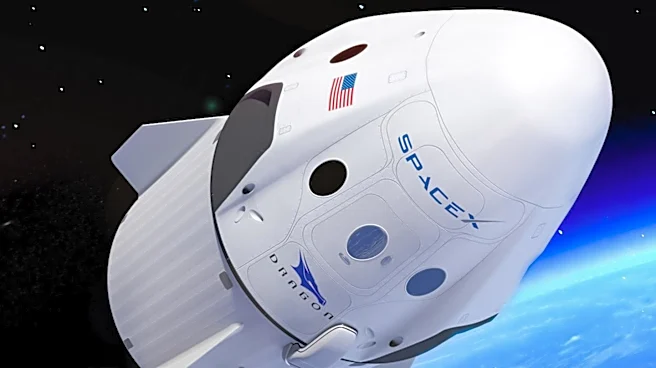
The crew for the Axiom-4 space mission is undergoing several months of rigorous training at NASA’s Johnson Space Center and partner facilities. This extensive preparation is crucial for orbital missions,
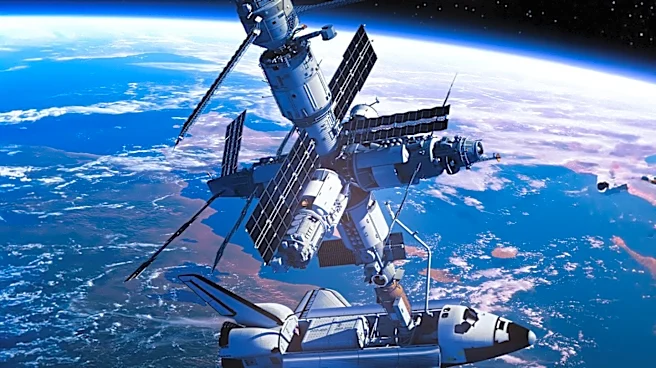
which differ significantly from suborbital flights. The training program covers a wide array of critical skills, including understanding the systems of the Dragon spacecraft and the International Space Station, mastering emergency procedures, and learning to operate effectively in microgravity for extended periods. Crew members are also trained on how to live and work collaboratively in the confined environment of a spacecraft. This comprehensive training ensures that each orbital crew member can function as an integral part of the mission, capable of responding to contingencies, conducting scientific experiments, and maintaining the spacecraft for one to two weeks, far from any immediate rescue possibilities. Unlike suborbital training, which typically lasts only a day or two, orbital mission preparation is a demanding, part-time job requiring a serious time commitment.
Why It's Important?
The rigorous training for orbital missions like Axiom-4 highlights the complex and high-stakes nature of human spaceflight. The extended duration and distance from Earth in orbital missions necessitate a far greater level of preparedness compared to brief suborbital trips. This training is vital for ensuring crew safety and mission success, as orbital astronauts must be self-sufficient and capable of handling a wide range of operational and emergency scenarios without immediate external support. The emphasis on understanding spacecraft systems, emergency protocols, and microgravity adaptation underscores the technical and physiological challenges of long-duration space travel. Furthermore, the training in crew coordination and living in confined spaces is critical for maintaining psychological well-being and operational efficiency during missions. The success of these training programs directly impacts the viability and expansion of commercial spaceflight and space tourism, demonstrating the commitment required to safely send civilians into orbit.
What's Next?
Following the completion of their multi-month training, the Axiom-4 crew will proceed with final mission preparations and ultimately embark on their orbital journey to the International Space Station. The ongoing training and subsequent mission will provide valuable data and experience for future commercial spaceflights. As the commercial space industry continues to grow, the lessons learned from missions like Axiom-4 will likely refine and enhance training protocols for future orbital travelers. This could lead to more standardized and efficient training programs, potentially making orbital space travel more accessible, albeit still highly demanding. The performance of the crew and the spacecraft during the mission will be closely monitored, influencing the development of future spacecraft designs, operational procedures, and the overall safety standards for commercial space exploration.
Beyond the Headlines
The intensive training for orbital missions like Axiom-4 reflects a broader shift in space exploration, moving beyond government-led initiatives to include private ventures. This transition introduces new considerations, particularly regarding the training and qualification of non-professional astronauts. The detailed curriculum, covering everything from spacecraft mechanics to psychological adaptation, underscores the inherent risks and complexities of space travel, regardless of the crew's background. The requirement for such extensive preparation also highlights the ethical responsibility of commercial space companies to ensure the utmost safety and capability of their crews. This rigorous approach could set a precedent for how future private space missions are conducted, potentially influencing international regulations and best practices for commercial human spaceflight. The success of these missions will not only advance scientific knowledge but also shape public perception and acceptance of space tourism and private space exploration as a legitimate and safe endeavor.