





What's Happening?
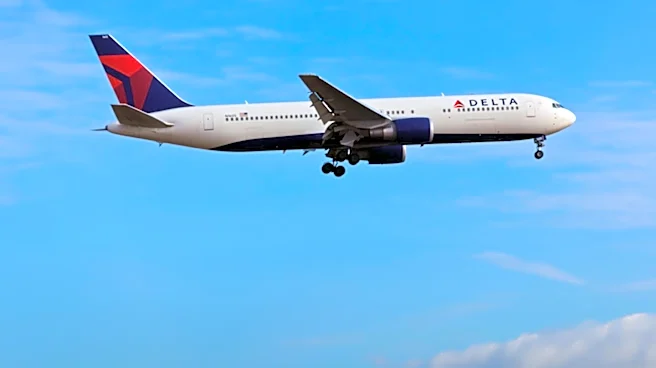
A Delta Air Lines Boeing 737, flight DL-2311, en route from Los Angeles to Salt Lake City, made an emergency diversion to Las Vegas after experiencing a mid-air depressurization at 35,000 feet over the Mojave Desert. The incident, which occurred on a Sunday
evening, caused oxygen masks to deploy throughout the cabin for the 181 passengers and crew on board. Pilots initiated a rapid descent to 9,000 feet to reach an altitude where the air is breathable without supplemental oxygen. Radio communications captured the pilots confirming the depressurization and the deployment of oxygen masks. Delta Air Lines stated that the flight crew followed their training and procedures to safely bring the aircraft to an optimal altitude due to an unexpected pressurization issue. This event marks another instance of a Delta 737 experiencing a pressurization problem within the past year.
Why It's Important?
This incident highlights critical safety protocols and the potential dangers of cabin depressurization in commercial aviation. The rapid deployment of oxygen masks and the subsequent emergency descent underscore the importance of immediate and effective crew response to such events. Passengers and crew have a very limited timeframe, typically 30 to 60 seconds, to don oxygen masks before hypoxia can set in, leading to impaired judgment or unconsciousness. The incident also brings attention to the maintenance and operational integrity of aircraft, particularly given that this is not the first pressurization issue for a Delta 737 in the last year. Such occurrences can erode public confidence in air travel safety and may prompt increased scrutiny from regulatory bodies like the Federal Aviation Administration (FAA) regarding airline maintenance practices and emergency preparedness.
What's Next?
Delta Air Lines will likely conduct a thorough investigation into the cause of the depressurization incident on flight DL-2311. This investigation will examine the 14-year-old Boeing 737's maintenance records, the performance of its pressurization system, and the actions of the flight crew. The FAA may also initiate its own inquiry or review Delta's procedures and maintenance logs. Depending on the findings, there could be recommendations for enhanced maintenance checks, revised operational protocols, or even airworthiness directives for similar aircraft models. Passengers affected by the incident may seek compensation for their experience, and the airline will likely continue to issue apologies and offer assistance to those impacted. The outcome of the investigation could influence future airline safety standards and passenger confidence.
Beyond the Headlines
The incident on Delta flight DL-2311 subtly underscores the constant vigilance required in aviation safety, often taken for granted by the flying public. While modern aircraft are designed with multiple redundancies, the human element in both maintenance and emergency response remains paramount. The reference to the Helios Airways flight 522 disaster, where a pressurization system error led to a fatal crash, serves as a stark reminder of the catastrophic consequences when such issues are not identified or addressed promptly. This event could prompt a broader discussion within the aviation industry about the aging fleet, the frequency of maintenance checks, and the psychological impact of in-flight emergencies on passengers and crew. It also highlights the ethical responsibility of airlines to prioritize safety above all else, ensuring that all systems are functioning optimally and that crews are impeccably trained for every contingency.