



What's Happening?
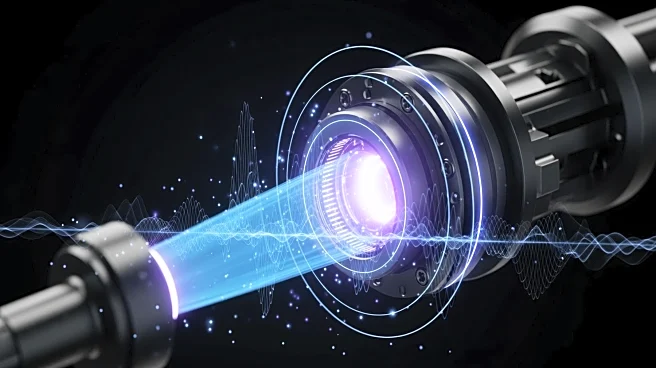
Researchers from the University of Tokyo and Chuo University have proposed a novel method to detect light dark matter using quantum sensors. These sensors, which leverage quantum mechanical effects, are capable of detecting extremely weak signals. The study,
published in Physical Review Letters, suggests that these sensors can track the velocity and direction of light dark matter, which is theorized to consist of particles with very small masses. This approach could significantly enhance the sensitivity of dark matter detectors, providing new insights into the elusive nature of dark matter.
Why It's Important?
Dark matter constitutes a significant portion of the universe's mass, yet it remains undetected by conventional means due to its weak interaction with ordinary matter. The development of quantum sensors for dark matter detection represents a major advancement in high-energy physics. By improving the ability to measure the properties of dark matter, this research could lead to a deeper understanding of the universe's fundamental components. The potential to detect light dark matter could also open new avenues for research in particle physics and cosmology.
What's Next?
The research team plans to refine their quantum sensor approach and apply it in experimental settings. This could involve developing more sophisticated quantum measurement protocols and expanding the array of detectors used in dark matter searches. The success of this method may inspire further exploration of quantum technologies in high-energy physics, potentially leading to breakthroughs in the detection and study of other fundamental particles.