







What's Happening?
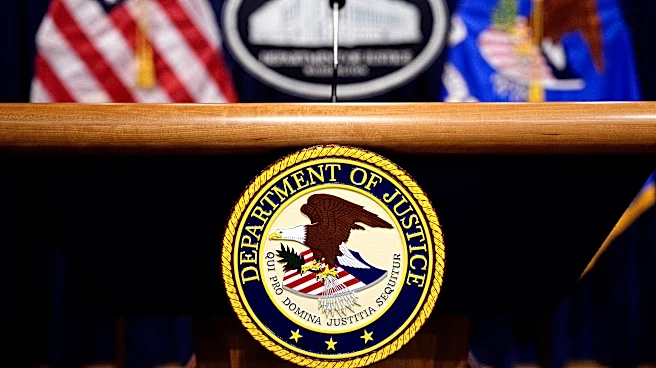
On October 7, 2026, Associate Attorney General Stanley Woodward, Jr. informed the American Bar Association’s (ABA) Council of the Section of Legal Education and Admissions to the Bar that the Antitrust Division suspects potential violations of Section 1
of the Sherman Antitrust Act. The inquiry focuses on the ABA's role as the sole Department of Education-recognized accreditor for law schools. The Department of Justice (DOJ) is concerned that the ABA's accreditation standards, particularly Standard 403, which mandates full-time faculty for a significant portion of coursework, may suppress demand for adjunct faculty, reduce their wages, and inflate tuition costs. The ABA maintains that its Council operates independently in its accreditation functions. The Department of Education is also evaluating whether the Council meets 'separate and independent' requirements under the Higher Education Act. The Council has proposed amending Standard 403 to eliminate the first-year coursework requirement, with a meeting scheduled for November 12–14, 2026, to discuss these changes. States like Texas and Florida have already begun to amend their bar admission rules to reduce reliance on ABA accreditation.
Why It's Important?
This federal antitrust inquiry into the ABA's accreditation practices carries significant implications for legal education and the legal profession in the U.S. If the DOJ's concerns are substantiated, it could lead to a restructuring of how law schools are accredited, potentially fostering greater competition and innovation in legal education. Law schools might gain more flexibility in their staffing models, possibly leading to a reduction in operational costs and, consequently, tuition fees. However, it also introduces uncertainty regarding degree portability, as ABA accreditation has historically been the gold standard for graduates seeking bar admission across states. The shift by states like Texas and Florida to establish their own approval processes for law schools indicates a growing trend towards decentralization in legal education oversight, which could create a more complex regulatory landscape for law schools and their graduates. The outcome of this scrutiny could redefine the balance of power between accrediting bodies, state bar associations, and law schools.
What's Next?
Law schools must prepare for a period of potential regulatory divergence, necessitating dual compliance with both ABA requirements and a growing number of state-specific standards. The Council is set to meet from November 12–14, 2026, to discuss proposed amendments to Standard 403, which could alter staffing models and budgets. Schools are advised to monitor these changes closely to ensure graduates' eligibility for bar admission remains secure and to engage in rulemaking processes to voice their perspectives on financial and operational challenges. Furthermore, schools should anticipate potential inquiries, such as third-party subpoenas or Civil Investigative Demands, from federal authorities regarding their accreditation and related communications. Identifying and preserving relevant correspondence with the Council and the ABA is crucial, and legal counsel should be consulted before responding to any government requests. The Federal Trade Commission has endorsed the rule changes in Texas and Florida, encouraging other states to follow suit, suggesting a broader movement towards state-level accreditation alternatives.
Beyond the Headlines
The DOJ's antitrust scrutiny delves into the fundamental structure of professional gatekeeping within the legal field. Beyond the immediate financial and operational impacts on law schools, this inquiry raises deeper questions about the role of professional associations in regulating their own industries. The argument that Standard 403 may be illegal per se because it allocates instructional responsibilities and potentially suppresses wages for adjunct faculty highlights a tension between maintaining academic standards and fostering a competitive market for educational services. This situation could set a precedent for how other professional accreditation bodies are scrutinized, potentially leading to broader reforms across various regulated professions. The ethical dimension of ensuring access to legal education and the profession, while also upholding quality, is at the forefront. The long-term implications could include a more diverse range of legal education providers, potentially including non-traditional models, and a re-evaluation of what constitutes a 'qualified' legal professional in an evolving legal landscape.