






What's Happening?
The Institute for the Study of War (ISW) and The Critical Threats Project (CTP) have reported on the ongoing tensions between the United States and Iran, focusing on recent developments involving President Trump and the Iranian regime. President Trump has
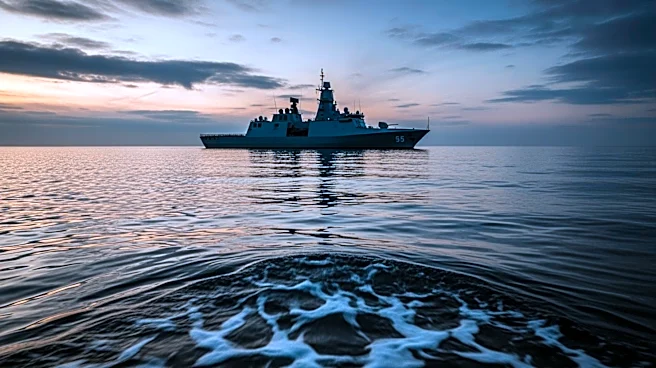
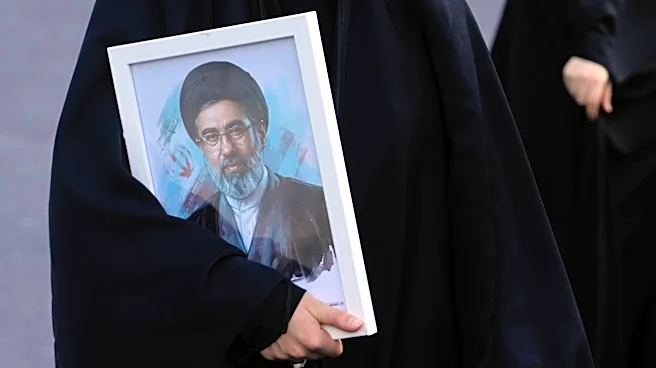
made statements on Truth Social highlighting internal divisions within the Iranian regime, particularly between 'moderate' and 'hardliner' factions. In response, Iranian leaders, including President Masoud Pezeshkian and Judiciary Chief Gholam Hossein Mohseni Ejei, have issued statements emphasizing their allegiance to the Islamic Revolution's principles. These statements aim to portray a unified front against the U.S. and counter accusations of moderation. The Iranian regime's response is seen as an attempt to maintain internal cohesion amid external pressures, including a U.S. blockade on Iranian ships and ports.
Why It's Important?
This development is significant as it underscores the ongoing geopolitical tensions between the U.S. and Iran, with potential implications for regional stability and international relations. The U.S. blockade and President Trump's statements are part of a broader strategy to pressure Iran into negotiations, which could impact global oil markets and international diplomatic efforts. The internal divisions within the Iranian regime could affect its ability to respond cohesively to external threats, potentially leading to shifts in its foreign policy and negotiation strategies. The situation also highlights the challenges faced by the Iranian leadership in balancing ideological commitments with pragmatic considerations in international diplomacy.
What's Next?
The future of U.S.-Iran relations remains uncertain, with potential for further escalation or diplomatic engagement. The Iranian regime's response to U.S. pressures and internal divisions will likely influence its approach to negotiations and regional alliances. The U.S. may continue to leverage economic and military pressures to achieve its strategic objectives, while Iran may seek to strengthen its alliances with other regional powers. The outcome of these dynamics could have significant implications for global security and economic stability, particularly in the context of energy markets and international trade.