









What's Happening?
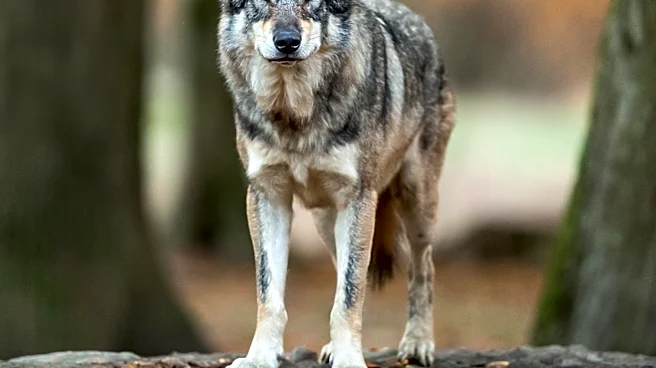
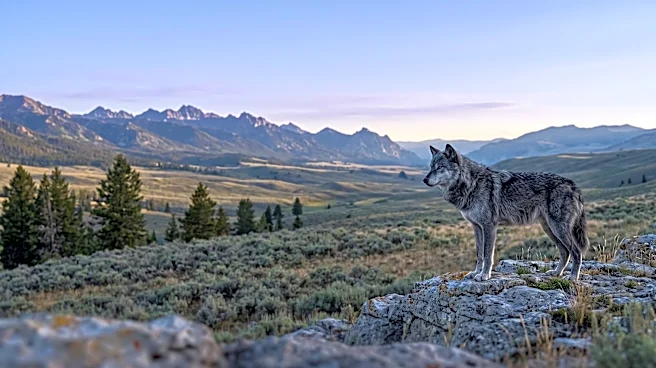
The Wyoming Game and Fish Commission has rejected requests to modify wolf hunting seasons to provide relief for the Mollie's Pack, a historic wolf pack whose territory and bloodlines are linked to the 1995-96 wolf reintroduction. The pack, including the 12-year-old
Wolf 1090F, one of the oldest wolves on record for Yellowstone and Wyoming, had shifted its primary territory outside Yellowstone National Park earlier in the summer. This move prompted calls from advocates to close or adjust hunting in specific areas, particularly hunt area one, where the pack had denned. Despite receiving numerous emails and public pressure, the Commission approved the wolf hunting regulations in July, with Interim Director Eric Wiltanger stating that population management is not based on individual animals.
Why It's Important?
This decision by the Wyoming Game and Fish Commission highlights the ongoing tension between wildlife conservation efforts and established hunting regulations in the state. The Mollie's Pack holds significant historical and ecological value, and the potential hunting of its members, especially an elder wolf like 1090F, has drawn considerable public attention and emotional responses. The Commission's stance underscores a policy of managing wolf populations based on broader ecological data rather than individual animals or specific packs, even those with high public profiles. This approach has implications for how wildlife management agencies balance scientific principles, public sentiment, and the interests of various stakeholders, including hunters and conservationists. The controversy also reflects differing views on the role of hunting in wildlife management and the extent to which human intervention should protect specific, well-known animals.
What's Next?
With the wolf hunting season commencing, members of the Mollie's Pack, particularly those that venture outside Yellowstone National Park boundaries, will be subject to the approved hunting regulations. The Wyoming Game and Fish Department has declined to disclose the current location of the pack, cautioning hunters that even if the pack has mostly returned to the park, individual members may still roam into huntable areas. The situation is expected to remain highly scrutinized by both hunting advocates and wolf conservationists. Social media platforms have already seen threats against hunters targeting the pack and counter-offers of bounties to identify those who legally kill the wolves, indicating continued public engagement and potential for further controversy throughout the hunting season. Wildlife managers are preparing for a high-profile season opener, acknowledging the unprecedented nature of the public's focus on this particular wolf pack.
Beyond the Headlines
The debate surrounding the Mollie's Pack extends beyond immediate hunting regulations, touching upon deeper ethical and cultural dimensions of wildlife management in the U.S. The emotional attachment to individual animals, especially those with a known history or unique characteristics like Wolf 1090F, challenges traditional population-based management models. This case also highlights the increasing role of social media in amplifying wildlife controversies, creating a complex environment where public opinion, scientific management, and hunting traditions intersect. The precedent of protecting famous wildlife, as seen with Grizzly 399 in 2018, suggests that public sentiment can sometimes influence management decisions. However, the Commission's current decision indicates a resistance to such influence in this instance, raising questions about the future balance between public advocacy and established wildlife policies, and the potential for long-term shifts in how iconic wildlife are managed in the face of public pressure.