



What's Happening?
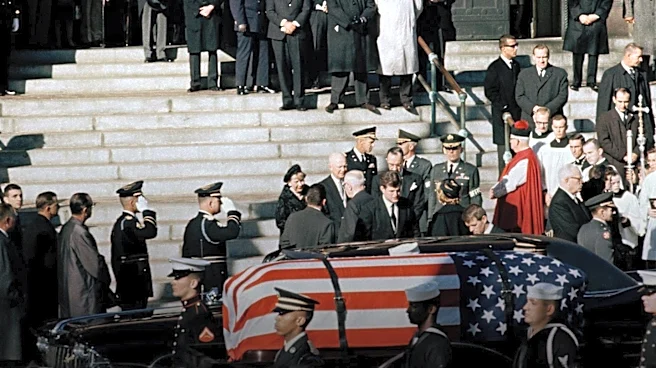
William Howard Taft, the 27th U.S. President and later Chief Justice, was the first president to be interred at Arlington National Cemetery. His burial in March 1930 preceded that of John F. Kennedy by 33 years. Taft, who served as president from 1909-1913
and Chief Justice from 1921-1930, resigned from his judicial role on February 3, 1930, due to ill health. He passed away on March 8, 1930, at the age of 72, following a stroke. His death prompted a period of national mourning, with President Herbert Hoover declaring 30 days of mourning and federal workers receiving a half-day off. Taft's body lay in state at the U.S. Capitol, where 10,000 mourners paid their respects, before a funeral service at All Souls Unitarian Church. The decision to bury him at Arlington National Cemetery was made by his family, with Taft qualifying due to his service as Secretary of War and Commander-in-Chief.
Why It's Important?
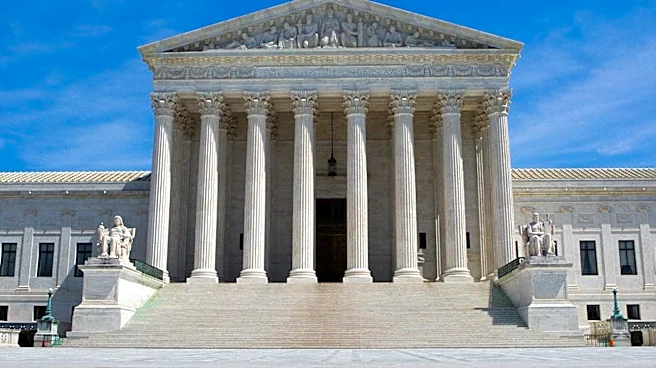
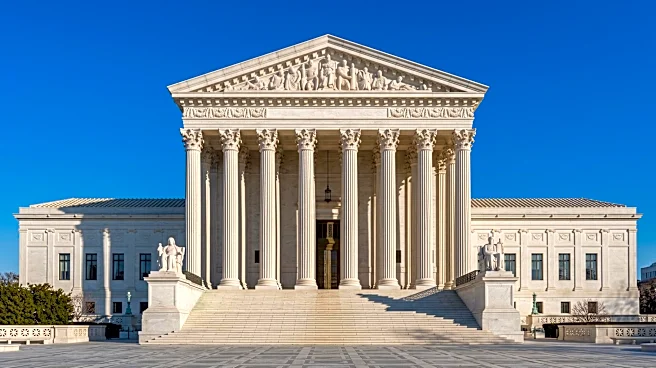
Taft's burial at Arlington National Cemetery established a precedent for presidential interments in the nation's most hallowed ground, a tradition later followed by President Kennedy. His unique career as both president and chief justice highlights a significant period in American political and judicial history, demonstrating a rare blend of executive and judicial leadership. The public's reaction to his death, including the extensive media coverage and official mourning, underscores his stature and the respect he commanded across political divides. Furthermore, Taft's instrumental role in advocating for and securing a permanent home for the U.S. Supreme Court, which was completed in 1935, profoundly shaped the physical and symbolic independence of the judicial branch. This move from the U.S. Capitol to its own dedicated building solidified the Supreme Court's status as an equal branch of government.
What's Next?
Each year, the U.S. military continues to host an Armed Forces Full Honors wreath-laying ceremony at Taft's grave site on his birthday, September 15, maintaining a tradition of honoring his service. While his grave receives fewer visitors compared to President Kennedy's, it remains a significant historical landmark within Arlington National Cemetery. The Supreme Court building, a lasting legacy of Taft's vision, continues to serve as the seat of the highest court in the U.S. and a symbol of judicial independence. Future historical analyses and public education efforts will likely continue to highlight Taft's dual roles and his contributions to both the executive and judicial branches of the U.S. government, ensuring his place in American history is recognized beyond his presidential term.
Beyond the Headlines
Taft's story offers a deeper insight into the evolution of presidential and judicial roles in the U.S. His transition from president to chief justice underscores a period when such career paths, though rare, were possible and respected. The establishment of the Supreme Court building, a project he championed, reflects a broader shift in American governance towards a more formalized and independent judiciary. This move was not merely architectural but symbolic, asserting the judiciary's co-equal status with the legislative and executive branches. The historical context of Arlington National Cemetery itself, created from the seized estate of Robert E. Lee, adds another layer of historical significance, connecting Taft's final resting place to the nation's Civil War legacy and its ongoing process of reconciliation and national identity formation. His life and legacy continue to serve as a testament to public service and institutional development in the United States.