






What's Happening?
The Global Energy Alliance for People and Planet (Global Energy Alliance) is supporting Jaipur Vidyut Vitran Nigam Limited (JVVNL) in developing India's first sodium-ion battery energy storage system (BESS) pilot. This initiative, formalized through a Memorandum
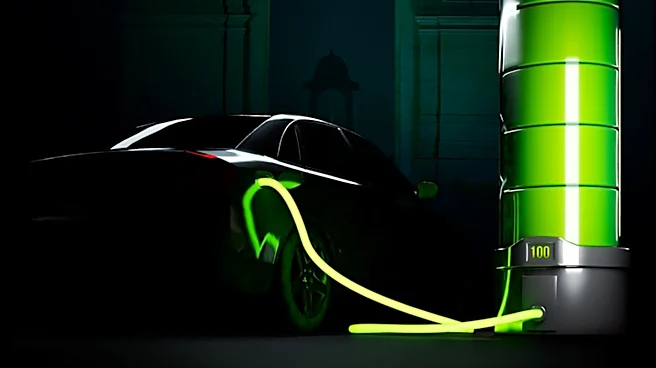
of Understanding (MoU), will see a 250 kW / 250 kWh pilot system deployed at K.L. Saini Stadium in Jaipur. The project aims to assess the performance and potential applications of sodium-ion storage in managing local peak electricity demand and improving the utilization of rooftop solar generation. The pilot will specifically test the technology under real-world distribution-network conditions, including Rajasthan's high summer temperatures, and evaluate it as an alternative to established battery chemistries like lithium-ion. JVVNL will provide the project site, a dedicated team, and operational data, while the Global Energy Alliance will offer technical support for system design, performance monitoring, and engineer training. The findings will be documented and shared with other distribution companies to inform future energy storage decisions.
Why It's Important?
This pilot project is significant for the U.S. and global energy landscape as it explores a new battery technology that could reduce reliance on lithium-ion, a market currently dominated by China. The U.S. has a strategic interest in diversifying its clean energy supply chains and reducing dependencies on single sources or regions for critical components. If sodium-ion technology proves viable and scalable, it could offer a more secure and potentially cost-effective alternative for energy storage, impacting the development and deployment of renewable energy solutions globally, including in the U.S. The project's focus on managing peak demand and integrating rooftop solar also aligns with U.S. efforts to modernize its grid and enhance energy resilience. Successful implementation could spur further research and investment in sodium-ion technology, potentially creating new manufacturing opportunities and reducing geopolitical risks associated with current battery supply chains. The insights gained from testing in challenging climatic conditions will be valuable for global applications.
What's Next?
Following the MoU, JVVNL and the Global Energy Alliance have issued a Request for Proposal (RfP) for the pilot project. The next steps involve the selection of a vendor and the subsequent installation and testing of the sodium-ion BESS. The project will then focus on rigorous assessment of the technology's technical efficiency, reliability, and safety performance, particularly its thermal behavior and risks associated with thermal runaway in high temperatures. Economic aspects, including costs, degradation, and lifecycle benefits compared to lithium-ion and conventional network upgrades, will also be thoroughly examined. The organizations plan to document and disseminate the findings, which will provide crucial evidence for Indian distribution utilities and potentially influence broader adoption of sodium-ion storage in other regions, including the U.S., as a viable option for distributed energy storage and grid modernization. Continued collaboration between JVVNL and the Global Energy Alliance, including work on digital twins and the India Grids of the Future Accelerator, will further support the project's objectives.
Beyond the Headlines
The exploration of sodium-ion battery technology goes beyond immediate energy storage solutions; it represents a strategic move towards greater energy independence and resilience. The current global reliance on lithium-ion batteries, with a significant portion of the supply chain concentrated in China, poses potential vulnerabilities for nations like the U.S. Sodium-ion, utilizing more abundant and widely distributed raw materials, could mitigate these geopolitical risks and foster a more diversified and secure global energy ecosystem. This shift could also lead to new economic opportunities in countries with sodium reserves, potentially rebalancing the global energy technology landscape. Furthermore, the project's emphasis on distributed energy storage at the transformer level highlights a broader trend towards decentralized energy systems, which can enhance grid stability, reduce transmission losses, and empower local communities with greater control over their energy supply. The ethical implications of resource extraction and environmental impact will also be a key consideration as this technology develops.