
What's Happening?
The remains of 1st Lt. Kendrick Lamont Key Jr., a U.S. soldier who went missing during military exercises in Morocco, have been recovered from the Atlantic Ocean. Key, a 27-year-old Air Defense Artillery
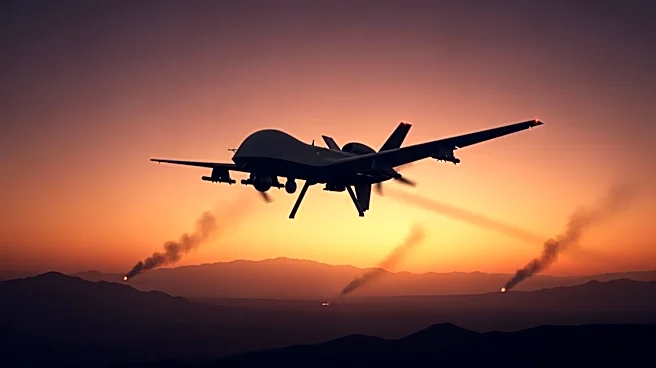
officer, was one of two soldiers who fell off a cliff during a recreational hike while off duty. The incident occurred near the Cap Draa Training Area outside Tan-Tan, a region known for its challenging terrain. The soldiers were reported missing on May 2 after participating in African Lion, an annual multinational military exercise. A Moroccan military search team found Key's remains on May 9, approximately one mile from where the soldiers reportedly entered the ocean. The search for the second missing soldier continues, involving over 600 personnel from the United States, Morocco, and other military partners, utilizing frigates, vessels, helicopters, and drones.
Why It's Important?
The recovery of Lt. Key's remains underscores the risks associated with military exercises, even during off-duty activities. African Lion is a significant U.S.-led exercise involving over 7,000 personnel from more than 30 nations, highlighting the strategic importance of military cooperation in Africa. The incident may prompt a review of safety protocols during such exercises, especially in challenging terrains. The ongoing search for the second soldier reflects the commitment of the U.S. military to account for all personnel, emphasizing the importance of international collaboration in search and rescue operations. This event also draws attention to the personal sacrifices made by military personnel and the impact on their families and communities.
What's Next?
The search for the second missing soldier continues, with U.S. and Moroccan forces maintaining their efforts. The U.S. military is likely to conduct a thorough investigation into the circumstances surrounding the incident to prevent future occurrences. This may involve reviewing safety measures and protocols for off-duty activities during military exercises. The findings could lead to changes in how such exercises are conducted, particularly in regions with challenging environments. Additionally, there may be discussions on enhancing international cooperation in search and rescue operations, given the multinational nature of the African Lion exercise.