



What's Happening?
Pork producers across the United States are intensifying their efforts to persuade Congress to repeal or modify California's Proposition 12. This 2018 ballot initiative mandates specific minimum space requirements for pigs, veal calves, and egg-laying
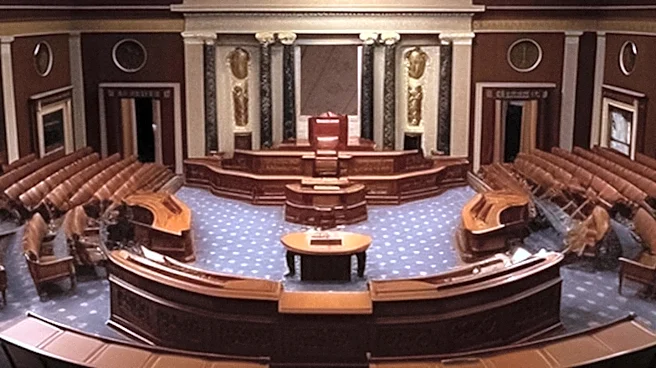
hens whose products are sold within California. The law has faced significant opposition from pork producers, who argue it imposes substantial costs and restricts their ability to sell products in one of the largest U.S. markets. While the Supreme Court ruled against producers' initial legal challenges, it indicated that Congress could establish a federal standard for livestock living conditions. The House version of the Farm Bill included a provision, known as the 'Save Our Bacon Act,' which would effectively invalidate Proposition 12 by preventing states from enforcing production standards on out-of-state livestock. However, the Senate's version of the Farm Bill currently lacks this provision, creating a legislative hurdle for producers seeking a nationwide solution.
Why It's Important?
The ongoing debate over Proposition 12 and its potential federal override carries significant implications for the U.S. agricultural industry, interstate commerce, and state regulatory authority. For pork producers, particularly those in states like Iowa where hog farming is a major economic driver, compliance with Proposition 12 can necessitate costly farm overhauls, potentially exceeding $1 million for individual farms. This financial burden can limit market access and competitiveness. The conflict also highlights a broader tension between state-level consumer and animal welfare regulations and the desire for uniform national agricultural standards. If Congress fails to act, it could lead to a patchwork of state-specific regulations, increasing complexity and costs for producers operating across state lines. Legal experts warn that federal intervention to nullify state laws could set a precedent that undermines states' rights to regulate commerce within their borders, potentially leading to widespread challenges in other sectors.
What's Next?
The immediate next step involves the progression of the Farm Bill through Congress. With the House and Senate versions differing significantly on the Proposition 12 provision, a conference committee will likely be necessary to reconcile the two bills. Pork producers and their advocates will continue to lobby lawmakers to include the 'Save Our Bacon Act' or similar language in the final legislation. Senators from agricultural states, such as Iowa's Joni Ernst and Chuck Grassley, have expressed strong dissatisfaction with the exclusion of the provision from the Senate bill and are expected to push for its reintroduction. If the Senate passes its version without the 'fix,' the ultimate outcome will depend on negotiations between the two chambers. The lack of a federal standard, despite the Supreme Court's opening, suggests continued uncertainty and potential for further legal and legislative battles over state-imposed agricultural regulations.
Beyond the Headlines
The Proposition 12 controversy extends beyond immediate economic concerns, touching upon fundamental questions of federalism and the balance of power between state and federal governments. The Supreme Court's decision, while upholding California's right to regulate products sold within its borders, implicitly invited Congress to establish a national standard. The current legislative impasse reflects a deeper ideological divide on whether states should have the autonomy to impose their values on out-of-state producers, or if a uniform federal approach is necessary to ensure a cohesive national market. This debate could influence future legislative efforts concerning environmental standards, labor practices, and other areas where state regulations might impact interstate commerce. The outcome will not only shape the future of animal agriculture but also set precedents for how federal and state authorities navigate complex regulatory landscapes in a highly interconnected economy.