



What's Happening?
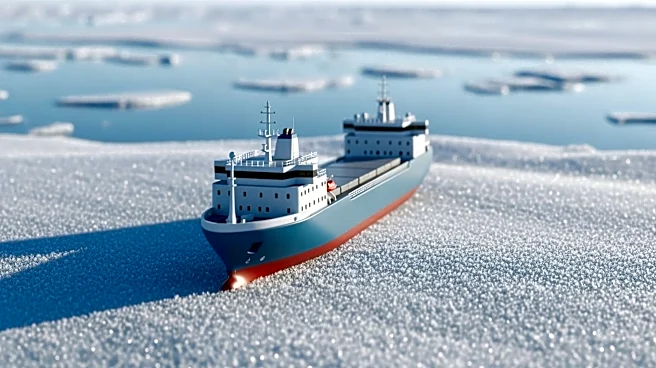
A recent report by credit insurance firm Coface has analyzed the commercial viability of Arctic shipping routes, concluding that their impact on global trade will remain marginal over the next five years. Despite the potential for reduced sailing distances—up
to 40% less between East Asia and Northern Europe—Arctic routes are expected to primarily benefit the transport of raw materials such as crude oil, diesel, LNG, and dry bulk. The report suggests that while Arctic shipping has surged, growth is uneven, and the region will not significantly disrupt global trade balances. The analysis indicates that container shipping will remain uncompetitive in the Arctic due to operational constraints and specific costs associated with Arctic navigation.
Why It's Important?
The findings underscore the limited commercial appeal of Arctic routes for container shipping, which is a major component of global trade. This suggests that traditional shipping routes will continue to dominate, maintaining the current economic and logistical frameworks. However, industries related to energy, metals, and timber may see cost benefits from Arctic routes, potentially influencing investment and operational strategies in these sectors. The report also highlights the geopolitical and environmental factors that are making Arctic routes more viable, such as climate change and disruptions at critical chokepoints. This could lead to strategic shifts in how certain commodities are transported globally.
What's Next?
In the short term, the Arctic routes are expected to remain more of a political statement than a commercial reality. However, as climate change continues to open up these routes, there may be increased interest and investment in infrastructure to support Arctic shipping. This could involve advancements in ship design and navigation technology to better handle the unique challenges of Arctic conditions. Additionally, geopolitical developments could further influence the strategic importance of these routes, potentially leading to new international agreements or conflicts over Arctic navigation rights.
Beyond the Headlines
The report's findings also raise questions about the environmental impact of increased shipping traffic in the Arctic. As more vessels navigate these waters, there could be significant ecological consequences, including risks to marine life and the fragile Arctic ecosystem. This highlights the need for stringent environmental regulations and monitoring to mitigate potential damage. Furthermore, the reliance on Arctic routes for raw material transport could lead to increased scrutiny and debate over the sustainability and ethical implications of exploiting these resources.