


What's Happening?
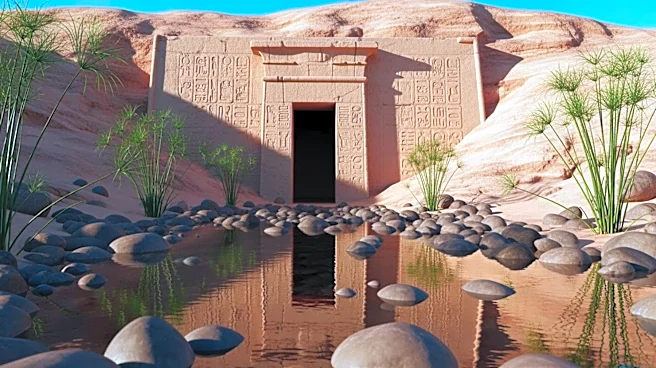
Archaeologists have discovered a rare circular temple dedicated to the local Egyptian deity Pelusius in North Sinai, Egypt. The 2,200-year-old structure, found at the site of Tell el-Farama in the ancient city of Pelusium, features complex water infrastructure
and was historically connected to the Nile River. This suggests the temple was used for sacred water rituals. The temple, initially uncovered in 2019, was fully excavated recently, revealing a circular basin approximately 115 feet in diameter with a square pedestal likely holding a statue of Pelusius. The site, strategically located near the Nile's mouth, was a bustling port city and fortress in pharaonic times and later served as a customs station during the Roman Empire. The temple's design blends ancient Egyptian traditions with Greek and Roman styles, highlighting cultural exchanges between Egypt and the wider world.
Why It's Important?
The discovery of the Pelusius temple is significant as it sheds light on the cultural and religious practices of ancient Egypt, particularly in the context of water rituals. The temple's unique architectural style, combining Egyptian, Greek, and Roman elements, underscores the historical cosmopolitan nature of Pelusium, a city that played a crucial role in trade and defense. This finding enhances our understanding of the interactions between different civilizations and the integration of diverse cultural influences in ancient Egypt. It also provides insights into the religious significance of water in Egyptian rituals, reflecting the broader environmental and spiritual connections of the time.
What's Next?
Further archaeological studies and analyses are expected to continue at the site to uncover more about the temple's history and its role in ancient Egyptian society. Researchers may focus on understanding the specific rituals performed and the temple's significance in the broader religious landscape of the region. The findings could lead to more discoveries about the city's infrastructure and its interactions with other ancient civilizations. Preservation efforts will likely be prioritized to protect the site and its artifacts for future study and public education.
Beyond the Headlines
The discovery of the Pelusius temple offers a deeper understanding of the religious and cultural dynamics of ancient Egypt. It highlights the importance of water in religious practices and the symbolic association with deities like Pelusius. The temple's architecture reflects a blend of cultural influences, illustrating the interconnectedness of ancient societies. This finding may prompt a reevaluation of the historical narrative surrounding Pelusium and its role as a cultural and economic hub in the ancient world.