





What's Happening?
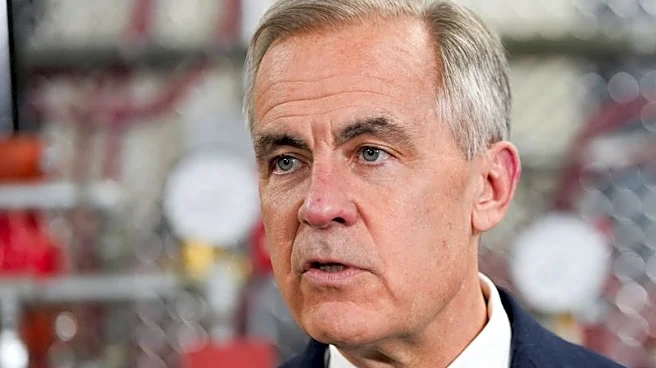
Canada has decided to negotiate with Sweden's Saab for early-warning aircraft technology, opting for a non-U.S. supplier. This decision was announced by Prime Minister Mark Carney at the CANSEC defense trade show in Ottawa. The Saab GlobalEye system will
be installed on Bombardier Global 6500 jets, which are manufactured in Canada. This move aligns with Carney's promise to reduce reliance on American military equipment, a stance influenced by the United States' increasing protectionism under President Trump. The GlobalEye system is designed to track threats such as hypersonic and cruise missiles, with a range of up to 650 kilometers. The decision also supports Canadian industry, with plans to produce a significant portion of the GlobalEye fleet domestically, creating over 3,000 jobs in the aerospace sector.
Why It's Important?
This decision marks a significant shift in Canada's defense procurement strategy, emphasizing self-reliance and diversification away from U.S. military suppliers. By choosing Saab, Canada aims to strengthen its defense capabilities while fostering domestic industry growth. The move could strain Canada-U.S. relations, particularly as the U.S. has expressed concerns over Canada's reconsideration of purchasing American-made F-35 jets. The decision also reflects broader geopolitical dynamics, as Canada seeks to balance its defense needs with economic and industrial benefits. The choice of Saab could influence future procurement decisions, potentially affecting the U.S. defense industry's market share in Canada.
What's Next?
Canada will enter negotiations with Saab to finalize the contract details for the GlobalEye system. The Canadian government will also continue to evaluate its defense procurement strategy, including the potential purchase of Saab's Gripen fighter jets. The outcome of these negotiations will impact Canada's defense posture and its industrial partnerships. Additionally, the U.S. may respond to this decision, potentially affecting bilateral defense cooperation. The Canadian government will need to manage these dynamics while ensuring that its defense needs are met and its industrial base is strengthened.