



What's Happening?
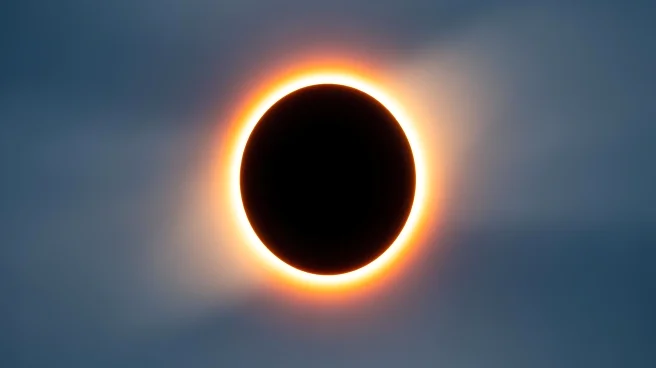
A spectacular solar eclipse, known as a 'ring of fire,' is set to occur on February 17, 2026. This astronomical event happens when the moon passes between the Earth and the sun, creating a bright ring of sunlight around the moon. The eclipse will be visible
as a partial eclipse from select locations, including parts of Antarctica, southern Africa, and southernmost South America. The path of annularity, where the full 'ring of fire' effect can be seen, will be limited to a small region in Antarctica.
Why It's Important?
The 'ring of fire' solar eclipse is a rare and visually stunning event that captures the interest of both scientists and the general public. It provides an opportunity for educational outreach and public engagement in astronomy. The event also highlights the importance of geographic positioning in observing celestial phenomena and underscores the need for safe viewing practices to prevent eye damage.
What's Next?
Following the solar eclipse, a lunar eclipse is expected on March 3-4, which will cast a reddish tint on the moon, often referred to as a 'Blood Moon.' These celestial events continue to engage both the scientific community and the public, offering further opportunities for observation and study.