




What's Happening?
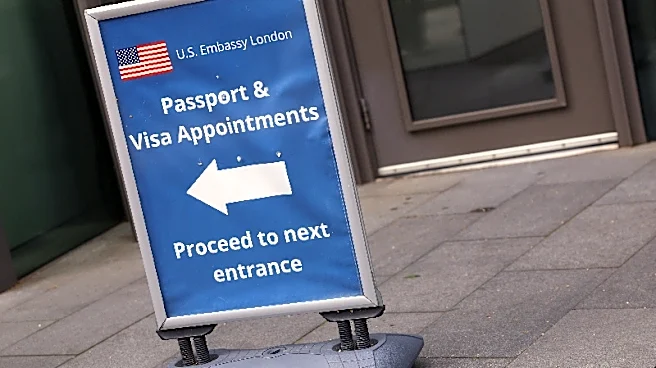
A federal judge has issued a preliminary injunction, preventing the Trump administration's new rule limiting the duration of stay for international students from taking effect. The Department of Homeland Security (DHS) rule, finalized in July, sought
to replace a nearly 50-year-old policy that allowed international students to remain in the U.S. until they completed their studies. The new regulation would have restricted most international students to a four-year stay, after which they would need to apply for an extension. U.S. District Court for the District of Massachusetts Judge F. Dennis Saylor IV ruled that the Trump administration failed to adequately respond to public comments or consider alternative options, violating the Administrative Procedure Act. Judge Saylor also stated that the government did not demonstrate a rational connection between the rule and its stated national security objectives, calling the justification "absurd" and based on a "small handful of anecdotes" that the rule would not prevent.
Why It's Important?
This ruling is significant for the U.S. higher education sector and its ability to attract and retain global talent. The blocked rule had raised widespread concerns among international education advocates and institutions, who argued it would negatively impact students, particularly those in Ph.D. programs that often exceed four years. Universities had also expressed fears that the regulation would make a U.S. education less appealing to international students, potentially leading to decreased enrollment and revenue. The decision preserves the existing system, which stakeholders believe is crucial for maintaining the U.S.'s competitive edge in global education and research. The outcome affects not only F-1 visa holders but also J-1 visa holders, including Fulbright scholars and foreign journalists, who are vital to cultural exchange programs.
What's Next?
The preliminary injunction prevents the rule from going into effect as scheduled. The lawsuit, filed by eight organizations representing the higher education sector, aims to vacate the rule entirely. A status conference is scheduled for October 2, where further proceedings will be discussed. While the injunction is an initial step in the litigation, it provides immediate relief to international students and educational institutions. The Department of Homeland Security may choose to appeal the decision or attempt to revise the rule to address the court's concerns. The ongoing legal battle will determine the long-term policy regarding international student visas and their duration of stay in the United States.
Beyond the Headlines
The judge's strong language, describing the government's national security justification as "absurd" and the rule as "misguided" and "ill-advised," highlights a broader tension between national security concerns and the economic and cultural benefits of international exchange. This case underscores the importance of administrative due process and the judiciary's role in scrutinizing executive branch actions, even when the court acknowledges it is not to judge the wisdom of policy. The repeated attempts by the Trump administration to implement this policy suggest a persistent focus on stricter immigration controls, which could continue to manifest in other areas. The outcome of this and similar cases will shape the future landscape of international education and the U.S.'s reputation as a welcoming destination for global scholars and professionals.