




What's Happening?
Zhang Jianyun, an academician of the Chinese Academy of Engineering and former president of the Nanjing Hydraulic Research Institute, stated on Saturday that while Northwest China has become warmer and wetter, these changes are insufficient to fundamentally
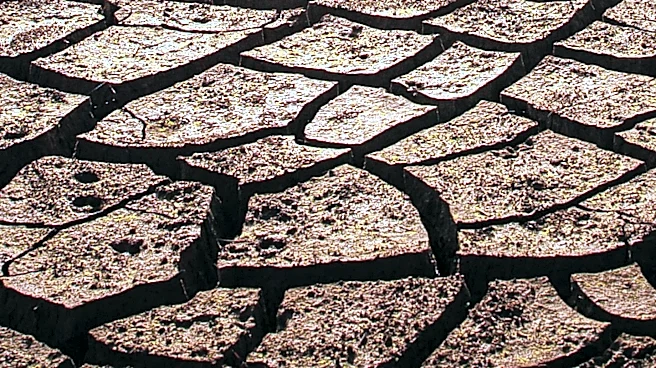
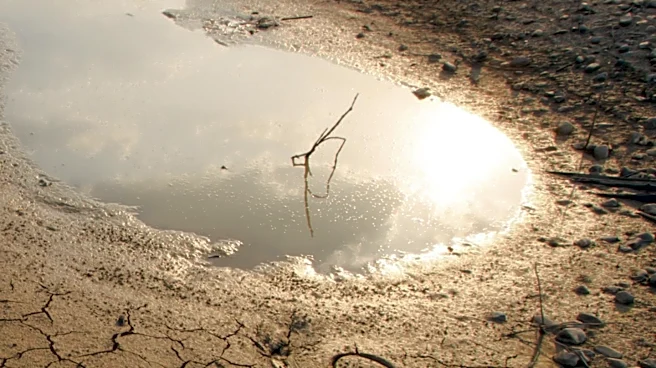
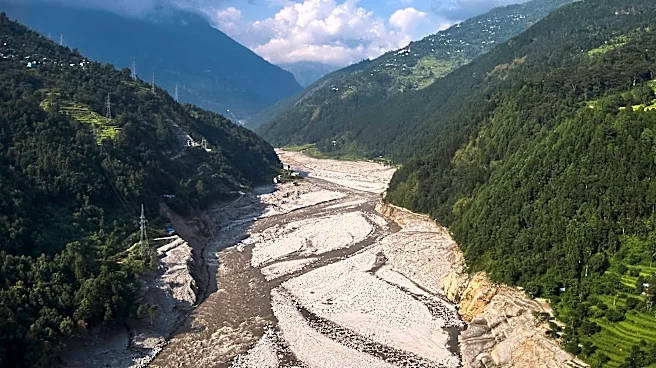
alter the region's arid climate or resolve its water shortages. Speaking at the IWHR Water Science Conference in Beijing, Zhang noted that temperatures in Northwest China have risen over the past century, exceeding the global average. Precipitation has also generally increased, with western areas seeing a rise for about 35 years and eastern areas experiencing a wetter trend since 2000. However, Zhang cautioned against interpreting this as a transformation into a warm and humid region, emphasizing that the increase in precipitation is only about 10 to 20 millimeters per decade in the western part, and overall precipitation levels remain comparable to the 1960s.
Why It's Important?
This assessment from a leading Chinese hydrologist is crucial for understanding long-term environmental planning and resource management in a region vital to China's development. Misinterpreting climate trends could lead to flawed water-resource and infrastructure decisions, potentially exacerbating existing water scarcity issues. While increased temperatures have accelerated glacier melt, contributing to river flows, intensified evaporation due to warming offsets many benefits of increased precipitation. This highlights the complex interplay of climate factors and the need for a nuanced scientific understanding rather than broad generalizations. For U.S. industries and policymakers observing global climate patterns and their impacts, this serves as a case study in the challenges of regional climate adaptation and the importance of precise scientific data.
What's Next?
Zhang Jianyun urged for a scientific and comprehensive understanding of the warming and wetting trend, advising against using it as the sole basis for major long-term water-resource and infrastructure decisions. This suggests a continued focus on detailed climate modeling and hydrological research in Northwest China. Future actions will likely involve careful monitoring of precipitation and evaporation rates, glacier melt, and river runoff to inform sustainable water management strategies. Policymakers and engineers in the region will need to integrate these scientific insights into urban planning, agricultural practices, and industrial development to ensure water security, rather than relying on assumptions of a fundamental climate shift.
Beyond the Headlines
The discussion around Northwest China's climate change underscores a broader global challenge: distinguishing between quantitative climate shifts and fundamental climatic transformations. The region's persistent aridity, despite some warming and wetting, illustrates that incremental changes do not always equate to a complete environmental paradigm shift. This has significant implications for international climate discourse, emphasizing the need for precise scientific communication to avoid misinterpretations that could lead to maladaptation or a false sense of security regarding water resources. Ethically, it highlights the responsibility of scientists to provide clear, unexaggerated data to guide policy, especially in regions facing critical resource constraints. Culturally, it may influence how communities perceive and adapt to environmental changes, potentially fostering resilience through realistic expectations rather than optimistic but unfounded hopes.