



What's Happening?
Water providers across Tennessee are enhancing their cybersecurity measures in response to a series of nationwide threats targeting water entities in at least 12 states. The FBI and Environmental Protection Agency issued a public service announcement
on July 30, warning the Water and Wastewater System sector about 'malicious cyber actors.' Incidents reported in Minnesota and other states between July 26-27 involved hackers targeting publicly exposed programmable logic controllers (PLCs), modifying passwords, and changing IP addresses to disconnect equipment, leading to loss of monitoring and control. Some facilities reported modified PLC project files, and operational effects included loss of pressure and flooding. While agencies have not officially attributed these attacks to ongoing conflicts, similar cyberattacks in 2023 and 2024 were linked to the CyberAv3ngers, a group associated with Iran's Islamic Revolutionary Guard Corps.
Why It's Important?
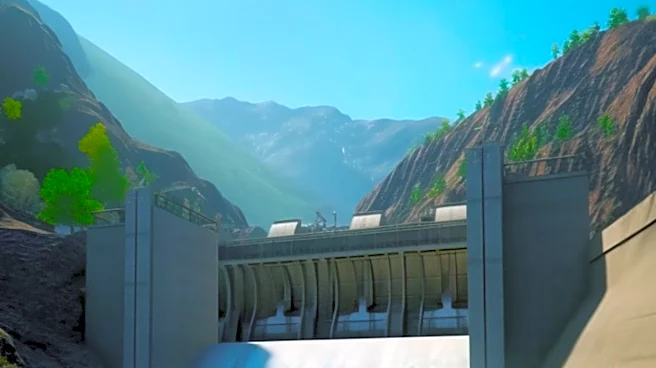
The cybersecurity threats to U.S. water systems are critically important due to their potential to disrupt essential public services, endanger public health, and cause significant economic damage. Water infrastructure is a vital component of national security, and successful cyberattacks could lead to contaminated water supplies, widespread outages, and even physical damage to facilities. The targeting of PLCs, which control operational equipment, demonstrates a sophisticated approach aimed at directly impacting system functionality. The reported operational effects, such as loss of pressure and flooding, highlight the immediate and tangible risks. For local water providers, these threats necessitate substantial investments in cybersecurity infrastructure, employee training, and continuous monitoring to protect against evolving cyber warfare tactics. The potential link to state-sponsored groups underscores the geopolitical dimension of these attacks, elevating them beyond typical criminal activity to a matter of national security.
What's Next?
Local water providers are expected to continue strengthening their cybersecurity defenses, with many already partnering with IT and cybersecurity vendors and enrolling in programs with the U.S. Department of Homeland Security for continuous asset assessment. The Tennessee Department of Environment and Conservation has issued alerts to wastewater treatment plants, emphasizing increased vigilance. The FBI and EPA will likely continue to monitor threats and issue further guidance to the Water and Wastewater System sector. There will be an ongoing need for collaboration between federal agencies, state regulators, and local utilities to share threat intelligence and best practices. The focus will be on securing internet-accessible assets, implementing robust password policies, and ensuring operational technology is isolated from potential cyber intrusions. The long-term outlook involves a continuous arms race between cyber attackers and defenders, requiring constant adaptation and investment in cybersecurity measures.
Beyond the Headlines
Beyond the immediate technical and security challenges, these cyberattacks on water infrastructure raise profound questions about critical infrastructure resilience and the nature of modern warfare. The potential for foreign adversaries to disrupt essential services through cyber means blurs the lines between conventional conflict and digital aggression. This necessitates a re-evaluation of national defense strategies to include robust cyber deterrence and response capabilities. Ethically, the targeting of civilian infrastructure, particularly water systems, could be seen as a violation of international norms, even if not directly attributed to state actors. Culturally, these incidents may erode public trust in the reliability of essential services and increase anxiety about the unseen threats of the digital age. The long-term societal impact could be a greater emphasis on cyber literacy, a demand for more secure and resilient infrastructure, and a redefinition of what constitutes national security in an increasingly interconnected world.