



What's Happening?
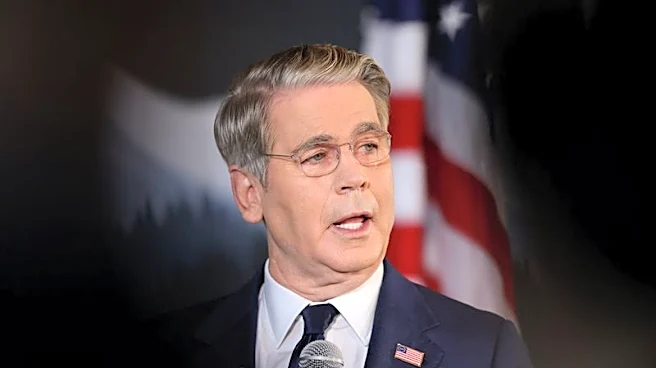
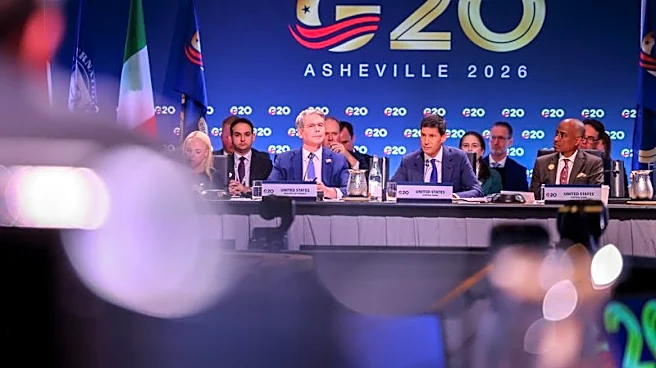
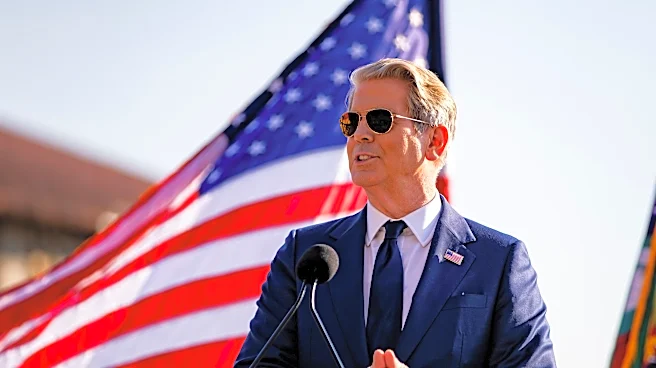
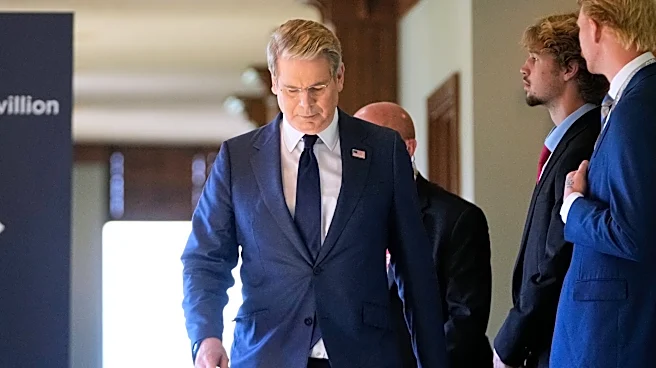
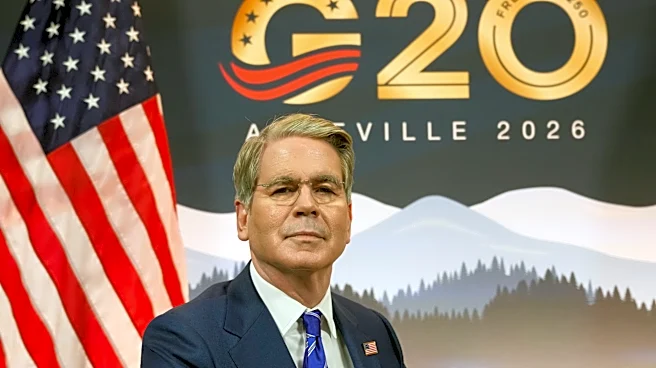
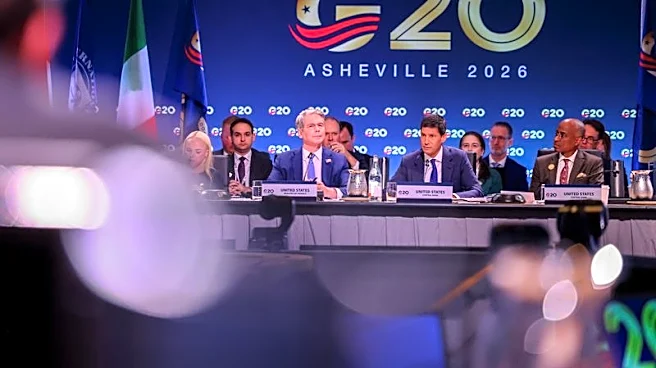
Treasury Secretary Scott Bessent announced that 19 out of 20 G20 members agreed on the unsustainability of 'cheap exports' causing global economic imbalances, with China being the sole dissenter. Bessent made these remarks following a two-day meeting
with finance ministers and central bankers, where he advocated for policies similar to the Trump administration's use of tariffs to address trade imbalances. He stated that non-market-based economies pushing out cheap exports are not sustainable and directly attributed China's large and unsustainable current account surplus as the reason for its dissent. Bessent also indicated that President Trump and Chinese President Xi Jinping would discuss artificial intelligence policy, emphasizing the need for more guardrails to prevent 'non-state actors' from developing their own AI models. He criticized AI companies for failing to adequately explain themselves to the American public, suggesting they must convince the public that benefits will not be limited to a small group. Additionally, Bessent noted common ground with China on Iran, specifically that Iran should not possess nuclear weapons and that oil flow through the Strait of Hormuz should remain free. The U.S. national debt has reached a record $40 trillion, and global debt stands at $353 trillion, though Bessent expressed no dire concerns about bond markets.
Why It's Important?
This development highlights a significant point of contention in global trade relations, particularly between the U.S. and China, and signals a potential escalation in trade disputes. The G20 consensus, excluding China, suggests a united front among major economies against practices perceived as unfair, which could lead to broader international pressure on China. For the U.S., this aligns with the Trump administration's 'America First' trade policies, aiming to protect domestic industries and jobs through measures like tariffs. The discussion on AI policy between President Trump and President Xi underscores the growing recognition of AI's strategic importance and the need for international cooperation or regulation to manage its development and prevent misuse by 'non-state actors.' Bessent's criticism of AI companies reflects a broader concern within the U.S. government about the equitable distribution of AI benefits and the need for greater transparency and public trust in the technology sector. The ongoing trade imbalances, particularly China's surplus and the U.S. deficit, continue to be a central economic challenge, impacting U.S. manufacturing, employment, and consumer costs. The U.S. Supreme Court's prior ruling against the Trump administration's sweeping global tariffs indicates a complex legal and political landscape for future trade actions.
What's Next?
President Trump and Chinese President Xi Jinping are scheduled to meet later this month, where artificial intelligence policy will be a key topic of discussion. This meeting could determine the future trajectory of U.S.-China relations, particularly concerning trade and technology. The Trump administration is reportedly overhauling its approach to tariffs and is considering an additional 7.5% tariff on Chinese imports, following investigations into alleged excess industrial capacity and forced-labor regulations. This potential tariff increase could further strain trade relations and impact global supply chains. Other G20 nations, having expressed agreement with the U.S. stance on 'cheap exports,' may consider implementing their own measures to protect domestic industries, potentially leading to a more fragmented global trade environment. The ongoing debate about AI regulation and the responsibility of AI companies is likely to intensify, with calls for greater transparency and equitable benefit distribution. The presence of Russian Finance Minister Anton Siluanov at the G20 meeting, despite discomfort from some attendees, suggests continued efforts by the U.S. to maintain dialogue with Russia, even amidst geopolitical tensions, indicating a complex diplomatic approach to international conflicts.
Beyond the Headlines
The G20's near-unanimous stance against 'cheap exports,' with China as the outlier, highlights a fundamental divergence in economic philosophies: market-driven competition versus state-supported industrial policies. This isn't merely a trade dispute but a clash over the very rules of global commerce, potentially leading to a redefinition of fair trade practices and the role of government intervention. The emphasis on AI policy in high-level discussions between the U.S. and China signals a new frontier in geopolitical competition, where technological dominance and ethical governance of AI could become as critical as economic and military power. Bessent's critique of AI companies' public relations reflects a deeper societal anxiety about technological disruption, job displacement, and the concentration of wealth and power in the hands of a few tech giants. The U.S. Supreme Court's previous ruling on tariffs underscores the constitutional checks and balances on executive power in trade policy, suggesting that future trade actions will face significant legal scrutiny. The continued engagement with Russia at the G20, despite strong objections from some allies, reveals the intricate balance of diplomacy, where maintaining communication channels is sometimes prioritized over complete isolation, even in the face of severe international disagreements.