
What's Happening?
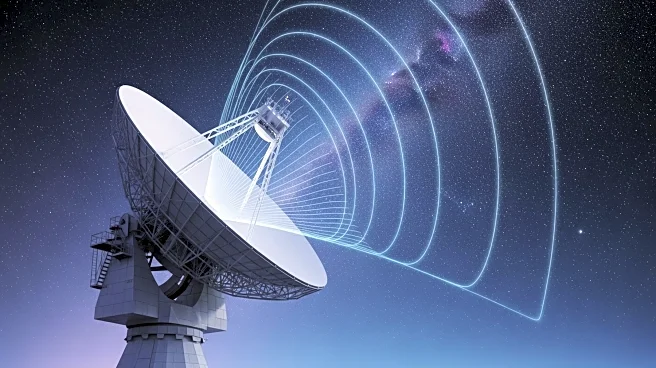
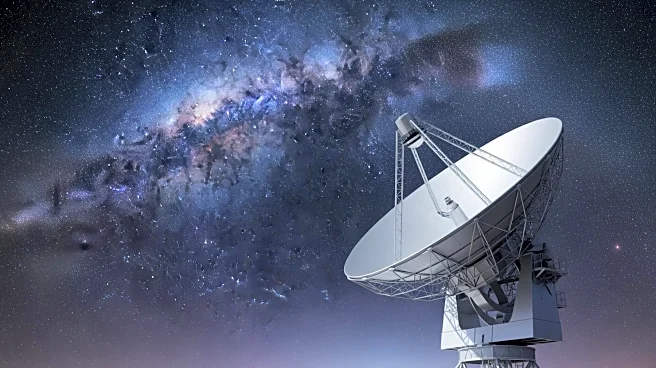
On February 13, 1974, astronomers Bruce Balick and Robert Brown used the National Radio Astronomy Observatory's instruments to observe the center of the Milky Way, detecting a powerful radio signal from
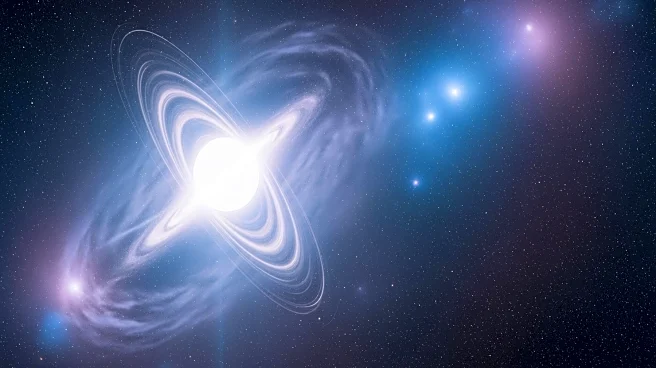
a sub-arcsecond source. This marked the first observation of Sagittarius A* (Sgr A*), the supermassive black hole at the galaxy's center. Their findings were published in the Astrophysical Journal later that year. The nature of Sgr A* as a black hole was confirmed over the following decades, significantly advancing our understanding of galactic centers.
Why It's Important?
The discovery of Sgr A* was a pivotal moment in astronomy, providing the first evidence of a supermassive black hole at the center of the Milky Way. This finding has profound implications for our understanding of galaxy formation and evolution. Black holes like Sgr A* play a crucial role in shaping their host galaxies, influencing star formation and the distribution of matter. The study of Sgr A* has also contributed to the development of techniques in radio astronomy and long-baseline interferometry, enhancing our ability to observe distant cosmic phenomena.
Beyond the Headlines
The observation of Sgr A* has opened new avenues for research into the behavior of matter under extreme gravitational forces. It has also sparked interest in the potential for black holes to serve as laboratories for testing the laws of physics, including general relativity. The ongoing study of Sgr A* and similar objects continues to challenge and refine our understanding of the universe, highlighting the importance of technological advancements in observational astronomy.