





What's Happening?
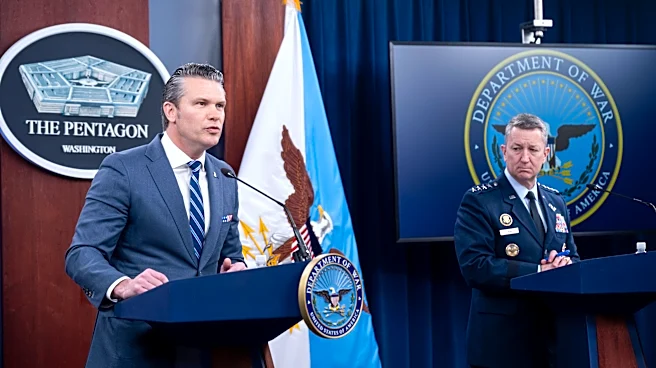
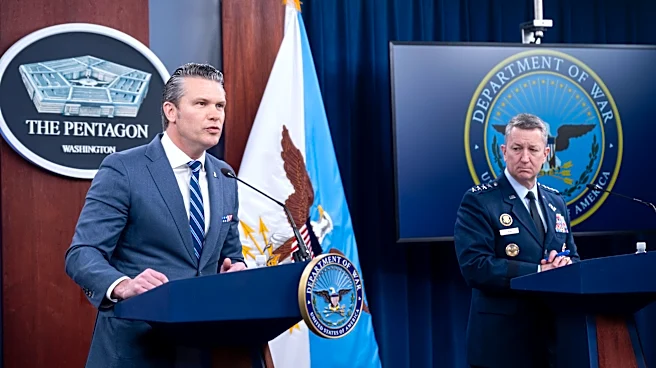
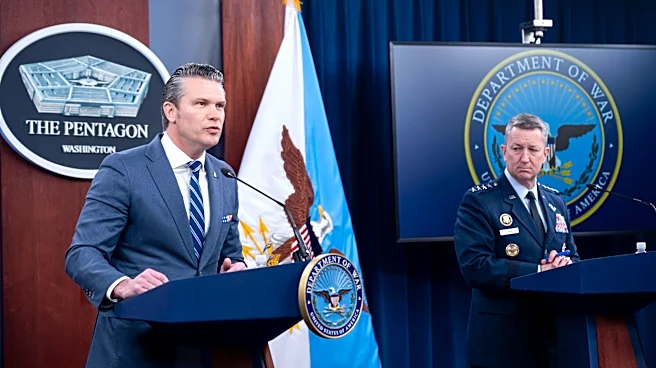
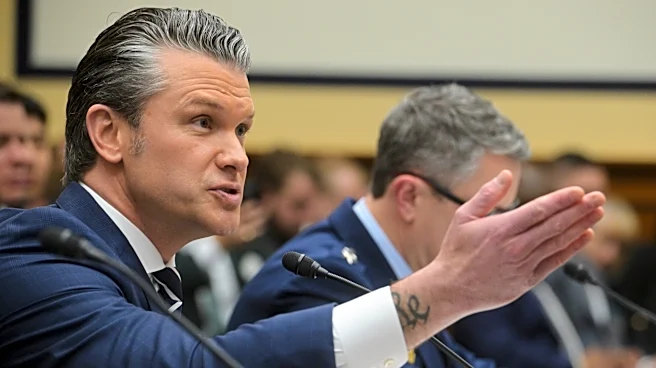
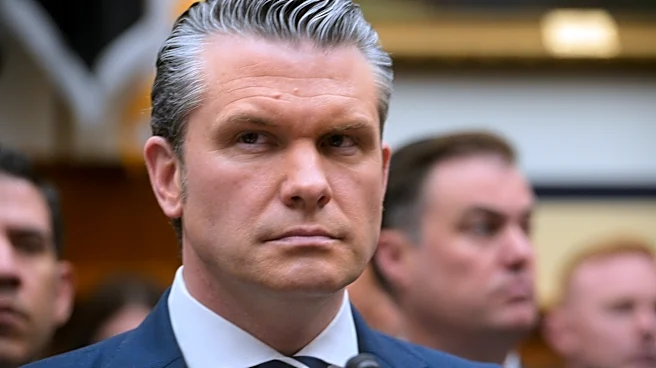
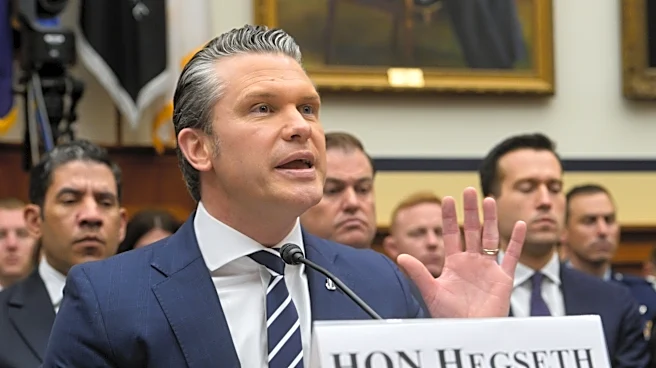
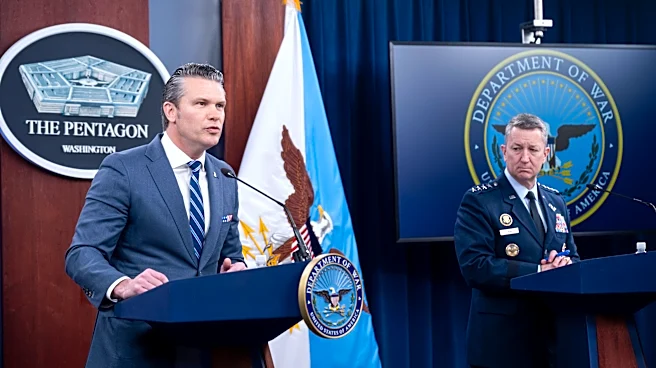
Defense Secretary Pete Hegseth testified before the Senate, denying allegations that he misled President Trump about U.S. military strategy in Iran. The hearing, part of a broader inquiry into the Iran war, saw Hegseth and Joint Chiefs of Staff Chairman
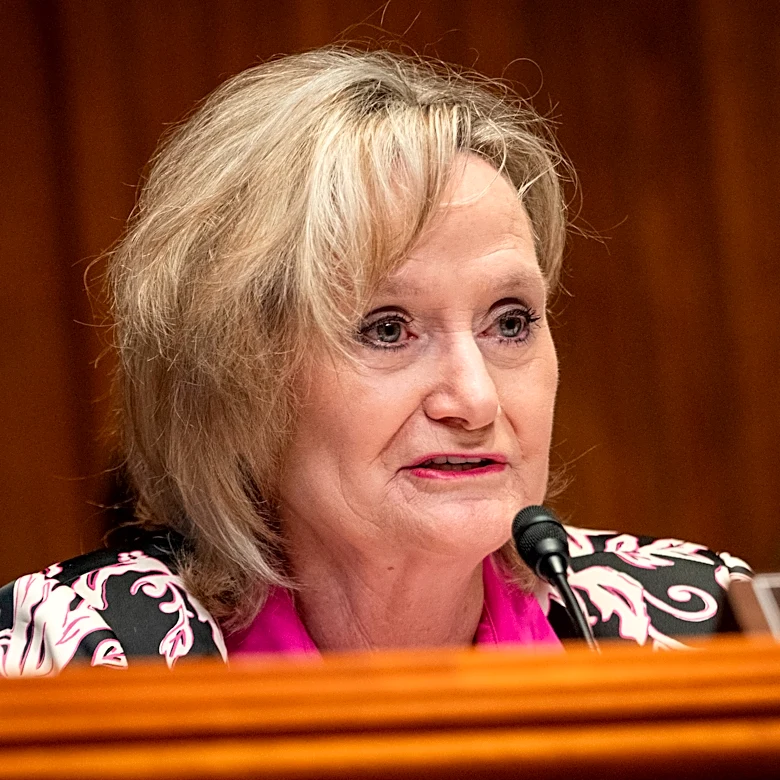
Gen. Dan Caine face questions about the war's costs and the Trump administration's proposed $1.5 trillion military budget for 2027. Hegseth defended the administration's interpretation of the War Powers Act, claiming a ceasefire pauses the 60-day limit on military action, a point contested by Democratic senators. The hearing also addressed allegations of Hegseth's financial interests in defense companies, which he denied.
Why It's Important?
The Senate hearing underscores the contentious nature of the Iran war and its implications for U.S. military policy and budgetary priorities. Hegseth's testimony highlights the administration's challenges in justifying its military actions and budget increases amid political opposition. The debate over the War Powers Act's application during a ceasefire raises constitutional questions that could impact future military engagements. Additionally, allegations of financial conflicts of interest among defense officials could erode public trust in military leadership and decision-making processes.
What's Next?
The Senate's examination of the Iran war strategy and military budget is likely to continue, with potential legal challenges to the administration's interpretation of the War Powers Act. The outcome of these discussions could influence U.S. military policy and budget allocations, as well as the administration's broader foreign policy approach. Further scrutiny of defense officials' financial interests may lead to calls for increased transparency and accountability within the Pentagon.