






What's Happening?
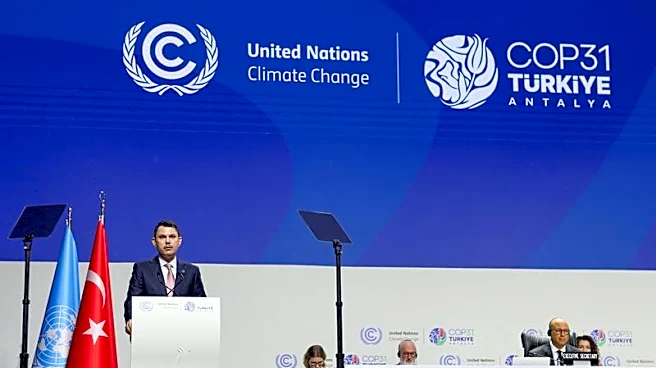
UN experts have emphasized the critical need for inclusive negotiations and human rights-centered outcomes at COP31, the upcoming climate summit. They assert that the conference must draw on all voices to address the escalating climate crisis, particularly
as scientific reports indicate global temperatures are set to exceed the 1.5°C limit. The experts highlighted the importance of extending the work program on mitigation, focusing on phasing out fossil fuels in all forms, including their use as feedstocks for plastics, pesticides, and fertilizers, which contribute to environmental harm and human rights issues. They also called for a decision on food systems that recognizes their role in both driving the climate crisis and expanding fossil fuel use, advocating for the 'defossilization and detoxification' of these systems. Furthermore, the experts urged COP31 to acknowledge Indigenous Peoples, peasants, and women-led agroecology as effective climate solutions.
Why It's Important?
The call for human rights-centered negotiations at COP31 underscores the disproportionate impact of climate change on vulnerable populations and the need for equitable solutions. By advocating for the phasing out of fossil fuels, including their use in plastics and agriculture, the UN experts are pushing for systemic changes that could significantly affect global industries. This could lead to increased pressure on fossil fuel companies, chemical manufacturers, and agricultural sectors to transition to more sustainable practices. Recognizing Indigenous knowledge and agroecology as climate solutions highlights the importance of traditional practices and local communities in environmental stewardship, potentially shifting funding and policy focus towards community-led initiatives. The emphasis on international cooperation and accountability for climate harm could also influence global financial mechanisms and legal frameworks related to climate justice.
What's Next?
The recommendations from UN experts will likely shape the agenda and discussions at COP31, pushing for stronger commitments to human rights and fossil fuel phase-out. Member states will face pressure to adopt decisions that support the 'defossilization and detoxification' of food systems and recognize the contributions of Indigenous Peoples and local communities. The call for polluters to pay for climate harm, referencing the International Court of Justice's Advisory Opinion, suggests potential future legal and financial frameworks for climate reparations. The experts also stressed the importance of ensuring meaningful participation from environmental human rights defenders, indicating that civil society engagement will be a key aspect of the summit's legitimacy and effectiveness. The outcomes of COP31 could set new international standards for climate action and human rights protection.
Beyond the Headlines
The UN experts' statement delves into the interconnectedness of climate change, human rights, and economic systems. By linking fossil fuel use to plastics, pesticides, and fertilizers, they highlight the pervasive nature of fossil fuel dependency across various sectors and its cumulative environmental and social costs. This perspective challenges the notion of isolated climate solutions, advocating for a holistic approach that addresses the root causes of environmental degradation and social injustice. The emphasis on 'defossilization and detoxification' of food systems points to a potential paradigm shift in agriculture, moving away from industrial practices towards more sustainable and regenerative models. This could lead to significant long-term changes in global food production, consumption patterns, and public health outcomes.