






What's Happening?
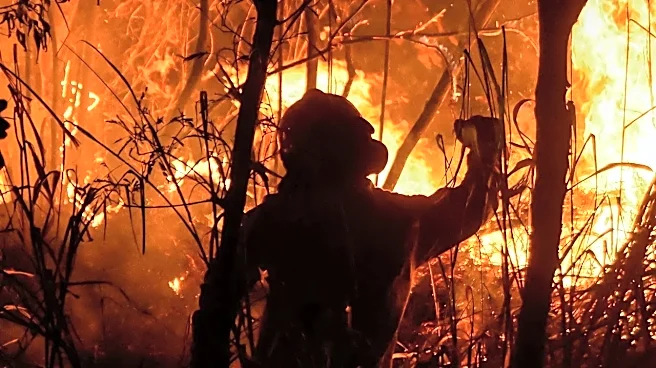
Heather Grabbe, a senior fellow at the Bruegel think tank, has emphasized the economic challenges posed by climate change in Europe. The summer heatwaves have significantly impacted the region's economy, with the Rhine's traffic halt alone expected to
reduce Germany's GDP by 0.3 percentage points. The reliance on emergency responses to climate events is proving costly and inefficient, particularly for countries like France and Italy, which already face high debt levels. The European Central Bank may be drawn into the situation as countries struggle to balance investment in defense and green energy transitions with existing financial constraints.
Why It's Important?
The economic repercussions of climate change are becoming increasingly apparent, with significant impacts on GDP and public finances. Countries heavily reliant on emergency responses may face mounting financial strain, potentially leading to increased government debt. This situation could pressure the European Central Bank to engage in more quantitative easing to stabilize bond markets. The broader implications include potential shifts in public policy and investment priorities, as nations grapple with the dual challenges of climate adaptation and economic stability.
What's Next?
Countries may need to reconsider their strategies for addressing climate change, moving away from ad hoc emergency responses towards more sustainable and efficient solutions. The European Central Bank's role could become more prominent if financial markets react negatively to increased government debt. Additionally, there may be increased pressure on governments to invest in infrastructure and technologies that mitigate the impacts of climate change, potentially leading to policy shifts and new economic opportunities.