





What's Happening?
The United States is at a strategic crossroads in Iraq as it reassesses its military and financial commitments in the region. Despite the official end of anti-ISIS operations in 2018, the U.S. continues to maintain a presence in Iraq, investing in infrastructure
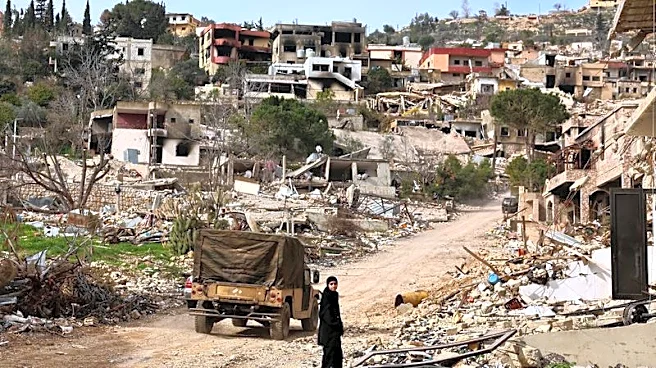
such as a new consulate in the Kurdistan Region. The Fiscal Year 2027 defense budget proposes significant changes, including a $303.1 million request for the Counter-ISIS Train and Equip Fund (CTEF) to support partner forces in Iraq, Jordan, Lebanon, and Syria. However, the budget notably excludes direct funding for the Kurdish Peshmerga forces, which could impact their operational capabilities and the stability of the Kurdistan region. This decision has raised concerns among U.S. lawmakers about the implications for U.S.-Kurdish relations and regional security.
Why It's Important?
The U.S. decision to restructure its defense funding in Iraq has significant implications for regional stability and U.S. foreign policy. The exclusion of direct funding for the Kurdish Peshmerga could weaken a key U.S. ally in the region, potentially destabilizing the Kurdistan region, which has been a relatively stable area amidst broader regional turmoil. This move may also affect the U.S.'s ability to counter Iranian influence in Iraq, as Iranian-backed militias continue to operate without U.S. sanctions. The decision reflects broader strategic considerations as the U.S. balances its commitments in the Middle East with domestic priorities and budget constraints. The outcome of these decisions will impact U.S. relations with Iraq and its allies, as well as the broader geopolitical dynamics in the region.
What's Next?
The U.S. must navigate complex diplomatic and military challenges as it implements the new defense budget. Lawmakers, including Republican Congressman Joe Wilson and Democratic Congressman Seth Moulton, have expressed the need to support Kurdish allies and maintain regional stability. The U.S. administration may face pressure to reconsider the funding allocations to ensure the Peshmerga forces remain effective partners. Additionally, the U.S. will need to address the ongoing threat posed by Iranian-backed militias and their impact on U.S. interests in Iraq. The decisions made in the coming months will shape the future of U.S. involvement in Iraq and its ability to influence regional security dynamics.