







What's Happening?
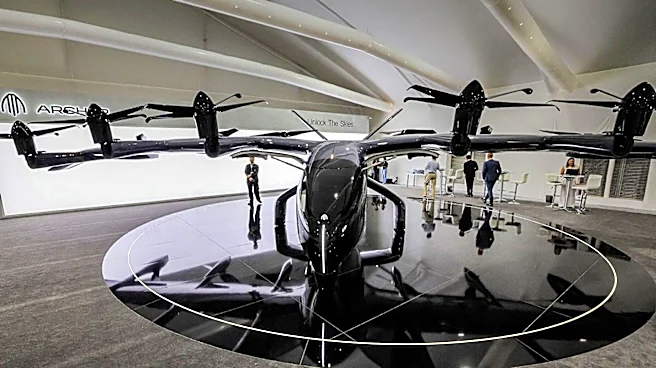
Wisk Aero, in collaboration with NASA, has completed a significant simulation campaign demonstrating the feasibility of one person supervising three autonomous aircraft simultaneously. This simulation explored how autonomous air taxis could operate safely
alongside conventional air traffic using current Air Traffic Control procedures. Conducted under a five-year Non-Reimbursable Space Act Agreement, the simulation involved Wisk's Autonomy Lab and NASA's Future Flight Central, focusing on integrating autonomous aircraft into the National Airspace System. The results showed that a single ground-based supervisor could manage multiple autonomous flights effectively, marking a crucial step toward scalable and practical autonomous air taxi operations.
Why It's Important?
This development is a major milestone in the field of Advanced Air Mobility, potentially revolutionizing urban transportation by making autonomous air taxis a viable option. The ability to manage multiple autonomous aircraft with minimal human intervention could lead to more efficient air traffic management and reduced operational costs. This advancement supports the broader goal of integrating autonomous vehicles into the national airspace, which could transform how people and goods are transported, enhancing mobility and reducing congestion in urban areas.
What's Next?
The data from this simulation will inform future communication standards, operating procedures, and policies for autonomous aircraft. As the technology progresses, further simulations and real-world tests will be necessary to refine these systems and ensure safety and reliability. Regulatory bodies will need to develop frameworks to accommodate these new technologies, and public acceptance will be crucial for widespread adoption. Continued collaboration between industry leaders and government agencies will be essential to address these challenges and realize the full potential of autonomous air mobility.