






What's Happening?
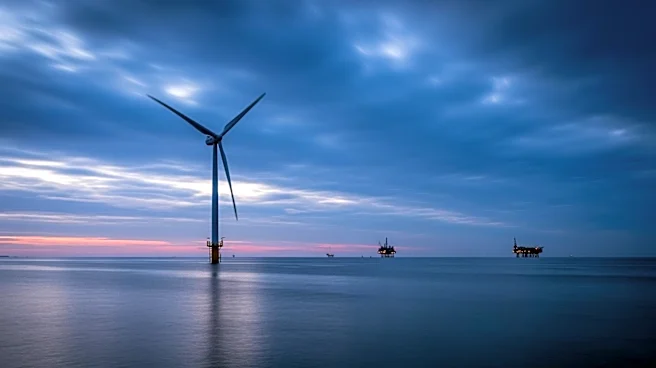
California energy officials have launched an investigation into an agreement made by the Trump administration with an offshore wind company to cancel a planned project off the state's central coast. The state is scrutinizing a $120 million government
payout to determine if it violated any laws. This payout, in exchange for fossil fuel investments, is part of President Trump's strategy to hinder the development of the offshore wind industry in the U.S. The California Energy Commission has issued a subpoena to Golden State Wind LLC, a joint venture between Ocean Winds and Reventus Power, to gather more information. The commission's chair, David Hochschild, emphasized the need for transparency, stating that taxpayer dollars should support sustainable energy projects rather than be used to terminate them. California aims to install 25 gigawatts of offshore wind by 2045 to meet its climate goals and has already invested over $100 million in necessary infrastructure.
Why It's Important?
The investigation highlights the tension between federal and state energy policies, particularly regarding renewable energy development. California's commitment to offshore wind is a critical component of its strategy to combat climate change and transition to sustainable energy sources. The probe into the Trump administration's actions could have significant implications for the future of renewable energy projects in the U.S., potentially influencing policy decisions and investment strategies. If the investigation finds legal violations, it could lead to increased scrutiny of past and future federal energy agreements, impacting stakeholders in the renewable energy sector and possibly altering the trajectory of the U.S. energy landscape.
What's Next?
The outcome of California's investigation could prompt further legal and political actions, potentially involving federal oversight or legislative changes to protect renewable energy initiatives. Stakeholders in the renewable energy industry, including investors and environmental groups, will likely monitor the situation closely, as the findings could affect future projects and investments. Additionally, the investigation may influence public opinion and policy debates on the balance between fossil fuel and renewable energy investments, shaping the national discourse on energy policy.