



What's Happening?
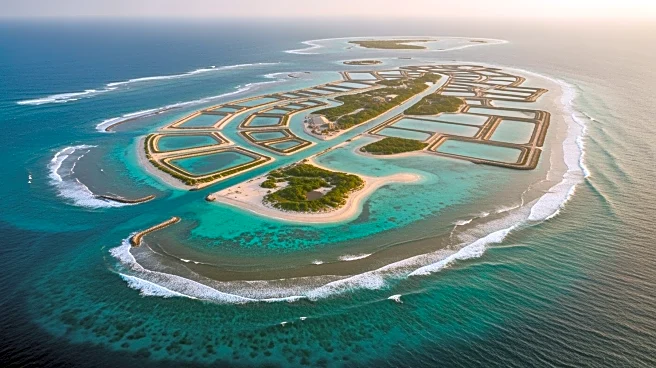
Recent satellite images indicate that China has rapidly begun construction activities at Antelope Reef in the Paracel Islands, a disputed area claimed by Taiwan and Vietnam. The images show significant transformation of the reef's landscape, with new
infrastructure such as roll-on/roll-off berths, suggesting preparations for large-scale dredging and land reclamation. These developments indicate China's ongoing efforts to convert the reef into a more permanent structure, potentially supporting logistical operations and future military deployments.
Why It's Important?
China's construction activities in the South China Sea are significant as they underscore Beijing's strategic ambitions in the region. By establishing a more permanent presence on disputed territories, China is asserting its claims and potentially altering the status quo. This could lead to increased tensions with neighboring countries and impact regional security dynamics. The construction also highlights China's ability to rapidly develop infrastructure in contested areas, which could have implications for international maritime law and freedom of navigation.
What's Next?
The international community, particularly countries with interests in the South China Sea, will likely respond to China's actions with diplomatic protests and calls for adherence to international law. The United States and its allies may increase their naval presence in the region to ensure freedom of navigation and deter further militarization. The situation could also lead to increased dialogue and negotiations among ASEAN countries to address territorial disputes and maintain regional stability.
Beyond the Headlines
The legal implications of China's construction activities are significant, as they challenge the principles of international maritime law and the United Nations Convention on the Law of the Sea (UNCLOS). The environmental impact of large-scale dredging and land reclamation is also a concern, as it could damage marine ecosystems and biodiversity in the region.