








What's Happening?
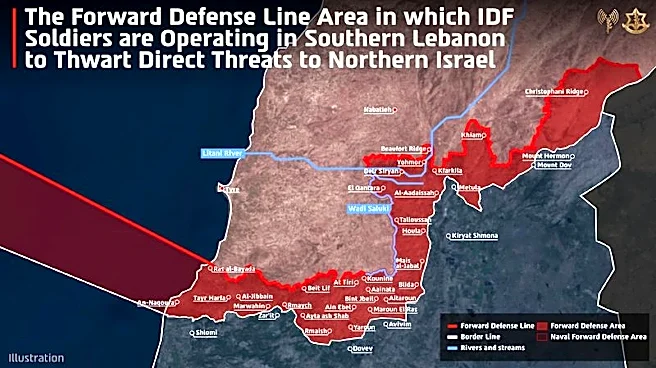
The Israeli Defense Forces (IDF) announced that over 150 Hezbollah militants were killed in a series of strikes across Lebanon, which took place in the 24 hours leading up to a ceasefire. Among those killed was Ali Reza Abbas, a senior Hezbollah commander
for the Bint Jbeil sector. This operation marked the fourth elimination of a person holding this role since the initiation of Operation Northern Arrows in 2024. The IDF reported that approximately 300 Hezbollah targets were hit, including launchers, command centers, and weapons storage sites. Lebanese social media, particularly those affiliated with Hezbollah, confirmed Abbas's death, describing him as a significant figure within the Radwan Force, Hezbollah's elite unit. Abbas, originally from Barish near Tyre, had been a part of Hezbollah for over 40 years and was considered one of its most experienced commanders.
Why It's Important?
The death of Ali Reza Abbas and the extensive strikes on Hezbollah targets represent a significant escalation in the ongoing conflict between Israel and Hezbollah. This development could potentially destabilize the region further, affecting geopolitical dynamics in the Middle East. The elimination of a high-ranking commander like Abbas could disrupt Hezbollah's operational capabilities, but it may also provoke retaliatory actions from the group, leading to further violence. For Israel, these strikes are part of a broader strategy to weaken Hezbollah's military infrastructure and deter future attacks. The international community, particularly countries with vested interests in Middle Eastern stability, will be closely monitoring the situation, as any escalation could have wider implications for regional security and international relations.
What's Next?
With the ceasefire now in effect, the immediate focus will likely be on maintaining the truce and preventing further hostilities. However, the death of a senior commander like Abbas could lead to internal discussions within Hezbollah about their next steps, potentially including retaliatory measures. The international community, including the United Nations and major powers, may engage in diplomatic efforts to ensure the ceasefire holds and to address the underlying issues fueling the conflict. Additionally, there may be increased calls for dialogue and negotiations to prevent future escalations and to find a long-term resolution to the tensions between Israel and Hezbollah.