





What's Happening?
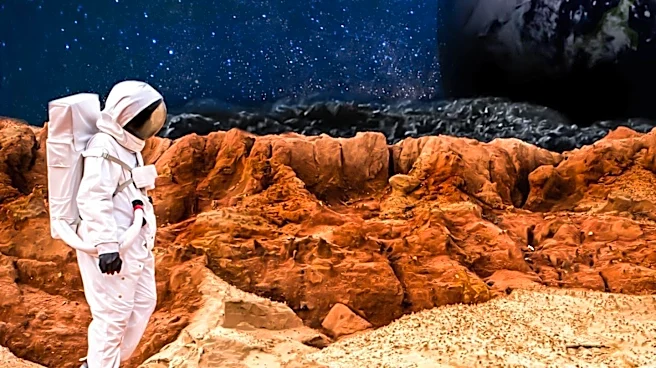
WWE Hall of Famer Kevin Nash has expressed skepticism regarding the authenticity of the moon landing, specifically questioning the logistics of deploying the Lunar Roving Vehicle (LRV) based on footage he viewed. During an episode of 'Kliq This,' Nash stated
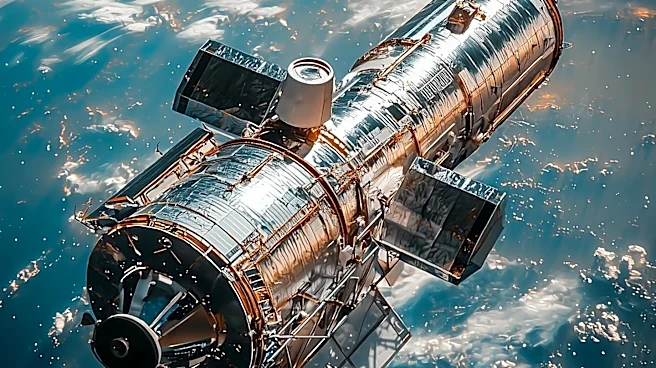
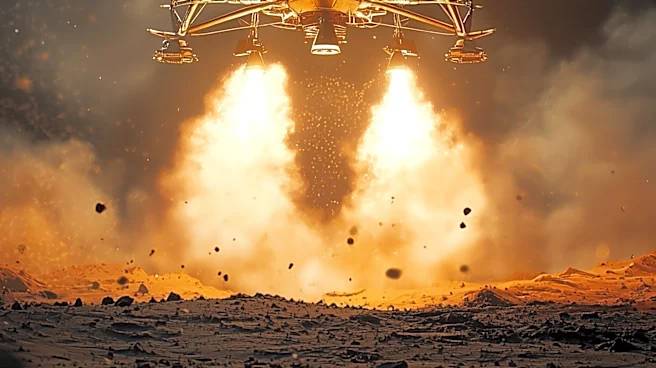
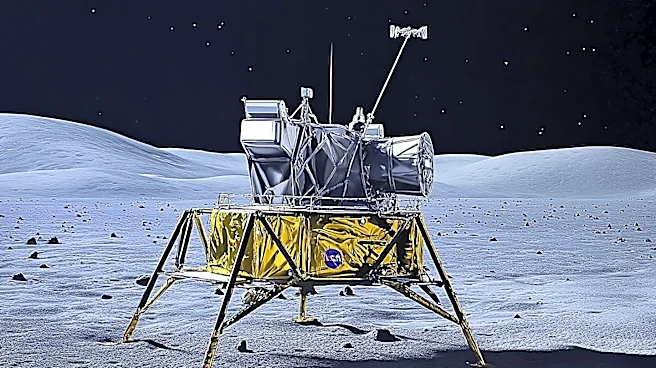
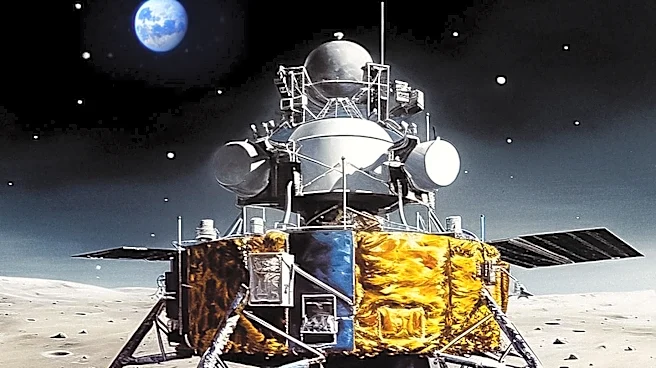
his disbelief that a 'bunch of tubes with aluminum foil wrapped on it landed on the moon,' and particularly struggled to understand how the moon buggy was transported and assembled on the lunar surface. He recounted watching footage showing a Lunar Module and an astronaut driving an LRV, leading him to ask, 'where was the f*cking moon buggy at?' Nash's co-host, Sean Oliver, attempted to explain that the rover was designed to be folded and deployed from the spacecraft. However, the source clarifies that the LRV was not used during the Apollo 11 mission in July 1969, but rather debuted with Apollo 15 in July 1971, when astronauts David Scott and James Irwin became the first to drive on the moon. NASA documentation confirms the LRV was specifically designed to fold into a compact package within the Lunar Module's descent stage.
Why It's Important?
This discussion, while originating from a celebrity's personal skepticism, highlights a broader societal challenge concerning public trust in scientific and historical narratives, especially in an era of widespread misinformation and advanced digital manipulation. Nash's questioning of the moon landing, even if based on a misunderstanding of specific mission details, reflects a segment of the public that remains unconvinced by official accounts. The conversation's pivot to the difficulty of trusting visual information in the age of AI and manipulated content underscores a critical issue for public discourse and education. For institutions like NASA, such skepticism, regardless of its origin, necessitates continued efforts in transparency and public outreach to clearly communicate complex scientific and engineering achievements. The incident also serves as a reminder of how easily specific details can be misconstrued or overlooked, leading to doubts about well-established historical events.
What's Next?
While Kevin Nash's comments are unlikely to trigger any official response from NASA or scientific bodies, the broader conversation he initiated about the difficulty of discerning truth in an age of advanced digital manipulation is ongoing. This incident may prompt further discussions within media and educational circles about media literacy and critical thinking skills. For the general public, it serves as an example of how easily historical facts can be misunderstood or questioned, particularly when specific details are not widely known. The continued evolution of AI and deepfake technologies will likely intensify these challenges, making it even more crucial for individuals to critically evaluate information and for reliable sources to provide clear, accessible explanations of complex topics.
Beyond the Headlines
The underlying theme of Nash's skepticism, particularly his concern about the believability of what people see, delves into the philosophical implications of truth and perception in the digital age. The ease with which images and videos can be altered or fabricated raises profound questions about the nature of evidence and the reliability of visual testimony. This extends beyond historical events like the moon landing to contemporary issues, impacting everything from political discourse to personal interactions. The incident also subtly touches upon the cultural phenomenon of celebrity influence, where public figures' opinions, even on scientific matters, can gain significant traction and contribute to broader narratives of doubt or belief. It underscores the ongoing need for robust scientific communication and education to counter the spread of misinformation and foster a more informed public understanding of complex achievements and historical events.