







What's Happening?
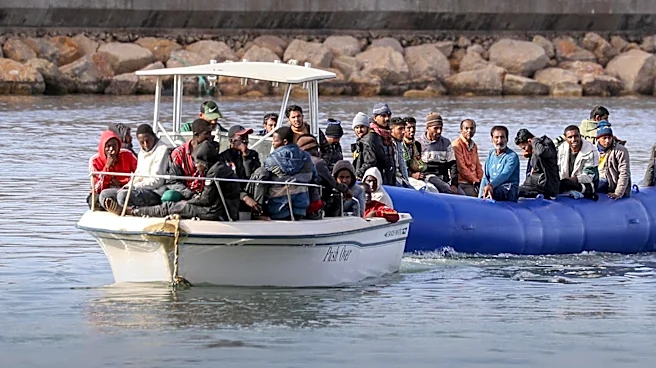
The Canary Islands are experiencing a significant increase in migrant arrivals, with nearly 2,200 individuals reaching the Spanish archipelago by boat within a 48-hour period. These islands serve as a primary entry point into Europe for migrants traveling
from Africa. The Spanish Interior Ministry reported that over 13,000 migrants have arrived in the Canary Islands between January and the end of the previous month. This recent surge highlights the ongoing challenges faced by the region in managing migration flows. The situation has prompted calls for government action to address the influx and its associated humanitarian and logistical concerns.
Why It's Important?
The continuous arrival of migrants in the Canary Islands underscores a broader European challenge concerning migration from Africa. The islands' role as a key entry point means that the situation there can reflect and influence wider European Union migration policies and resource allocation. The sheer volume of arrivals in such a short period places immense pressure on local resources, including housing, healthcare, and social services. This can lead to humanitarian concerns for the migrants and strain on the host communities. The situation also highlights the complex geopolitical factors driving migration, including economic hardship, conflict, and political instability in African nations, which necessitate a coordinated international response.
What's Next?
The Canary Islands are urging the Spanish government to take immediate action to address the escalating migrant crisis. This likely involves requests for increased resources, including financial aid, personnel, and logistical support, to manage the arrivals and process asylum claims. There may also be calls for enhanced cooperation with African nations to address the root causes of migration and to strengthen border controls. The European Union may also become more involved, potentially through discussions on burden-sharing among member states and the development of more comprehensive migration strategies. The ongoing arrivals suggest that this issue will remain a prominent concern for both Spain and the wider EU in the near future.
Beyond the Headlines
The migrant situation in the Canary Islands extends beyond immediate logistical challenges, touching upon deeper ethical and legal considerations. The journey across the Atlantic to the islands is often perilous, raising questions about the safety and human rights of those undertaking it. The response to these arrivals also reflects broader societal debates within Europe regarding immigration, national sovereignty, and humanitarian obligations. The long-term integration of migrants into European societies, the economic impact of migration, and the potential for social tensions are all underlying implications of these events. The situation also highlights the need for sustainable solutions that address both the immediate needs of migrants and the underlying factors driving their displacement.