







What's Happening?
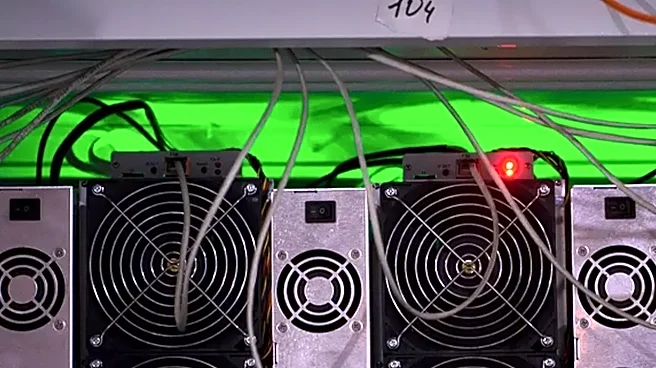
Senate Democratic Leader Chuck Schumer (D-N.Y.) is actively working to prevent the passage of a bill aimed at protecting families from increased energy costs associated with new AI-driven data centers. The bill, co-sponsored by U.S. Senator Tommy Tuberville
(R-Auburn) and U.S. Senator Jon Husted (R-Ohio), passed the House with a bipartisan vote of 417-3. It seeks to ensure that companies building data centers, rather than households, bear the cost of new power plants and transmission lines required to serve these facilities. Senator Schumer has labeled the measure a 'fraud,' arguing that it is voluntary and does not mandate companies to comply, in contrast to a mandatory bill he supports. His second-in-command, Senate Democratic Whip Dick Durbin (D-Ill.), has not publicly stated a position on the bill. Republican leaders in the Senate intend to force a recorded vote on the bill, which would require every Senate Democrat to publicly state their stance.
Why It's Important?
This legislative battle highlights a significant policy debate regarding the economic impact of rapidly expanding AI data centers on American households and energy infrastructure. If Senator Schumer successfully blocks the bill, the financial burden of powering these energy-intensive facilities could disproportionately fall on consumers through higher utility bills. This would affect the affordability of essential services for families, particularly in states like Alabama, where Senator Tuberville emphasizes the need to protect residents from increased energy costs. The outcome will also set a precedent for how the U.S. government addresses the energy demands of emerging technologies and whether the costs are socialized or borne by the corporations driving the demand. The bipartisan support the bill received in the House underscores a broad recognition of the issue, making Schumer's opposition a key point of contention that could reveal divisions within the Democratic party on economic policy and technology regulation.
What's Next?
Senate Republican leaders are planning to force a recorded vote on the Ratepayer Protection Act as early as this week. This move will compel every Senate Democrat to publicly declare their position on the bill, potentially exposing internal party divisions and creating political leverage for Republicans. Senator Schumer has indicated he will 'whip' Senate Democrats to block the bill, suggesting a concerted effort to prevent its passage. The bill's future hinges on whether Schumer can rally enough Democratic opposition to prevent it from advancing, or if the bipartisan support seen in the House can translate into sufficient votes in the Senate. The debate will likely continue to focus on the voluntary versus mandatory nature of the protections, with Senator Husted and other proponents arguing that Schumer's opposition is a 'fraud' on the American people regarding affordability.
Beyond the Headlines
The conflict over the Ratepayer Protection Act extends beyond immediate energy costs, touching upon broader themes of corporate responsibility, technological advancement, and consumer protection in the digital age. The rapid growth of AI and data centers presents a challenge to existing energy grids and raises questions about who should finance the necessary infrastructure upgrades. This legislative dispute could signal a growing tension between the push for technological innovation and the need to safeguard public welfare and economic stability. It also highlights the influence of 'Big Tech' companies, which signed President Trump's Ratepayer Protection Pledge, on policy decisions. The outcome of this debate could shape future regulatory frameworks for energy consumption by large-scale tech operations, potentially influencing investment decisions and the geographical distribution of data centers across the U.S.