







What's Happening?
Weardale Lithium has appointed Michael Fallon as Senior Strategic Advisor to advance its plans for lithium production from geothermal brines in the UK. Fallon, who has extensive experience in the UK government, including roles as Secretary of State for Defence
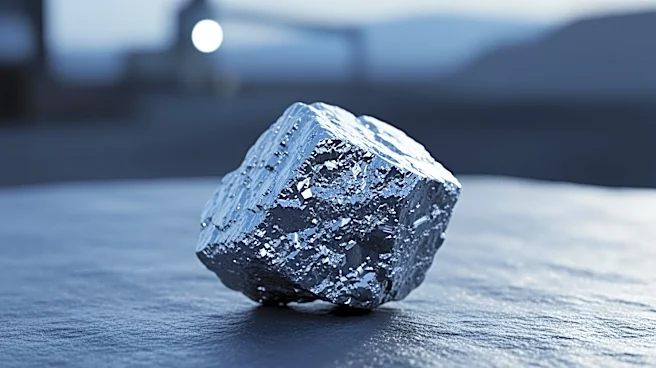
and Minister of State for Business and Energy, will provide strategic insight to the company. Weardale Lithium aims to strengthen its strategic capability in response to increasing demand for domestic sources of lithium and other critical minerals, driven by geopolitical forces and the global transition towards electrification. The company is developing a commercial lithium extraction facility in County Durham, which has received planning approval for a two-phase development, making it the UK's largest permitted lithium extraction project.
Why It's Important?
The appointment of Michael Fallon is significant as it aligns with the UK's broader goals of enhancing sovereign resilience and securing domestic supply chains for critical minerals. As the global demand for lithium surges due to the electrification of industries and the push for renewable energy, establishing a domestic lithium industry is crucial for the UK's economic resilience and industrial competitiveness. Weardale Lithium's project is expected to contribute to regional economic activity by creating high-skilled jobs, engaging local supply chains, and attracting inward investment. This development is a strategic move to position the UK at the forefront of the lithium industry, reducing reliance on foreign imports and enhancing energy transition ambitions.
What's Next?
Weardale Lithium will continue to progress its plans in County Durham, with the support of Michael Fallon's strategic guidance. The company aims to scale up its operations to commercial levels, which will involve further development of its lithium extraction facility. As the project advances, it is likely to attract attention from investors and stakeholders interested in the UK's critical minerals sector. The successful implementation of this project could serve as a model for similar initiatives, potentially influencing policy decisions and encouraging further investment in domestic mineral production.