





What's Happening?
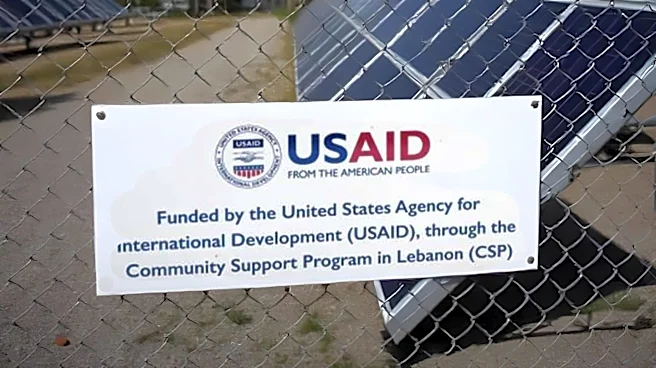
Samantha Power, the last confirmed administrator of the United States Agency for International Development (USAID), has expressed her dismay over the agency's closure under the Trump administration. USAID, which was officially shut down in July 2025,
had been a significant arm of U.S. foreign policy, employing around 15,000 people globally and managing numerous programs aimed at combating disease and poverty. Power criticized the administration's decision to dismantle the agency, describing it as both cruel and short-sighted. She highlighted the personal and professional impact on former USAID staff and the broader implications for global humanitarian efforts. Despite the closure, Power remains hopeful that bipartisan support for foreign aid could lead to the agency's reconstitution in some form.
Why It's Important?
The closure of USAID marks a significant shift in U.S. foreign aid policy, with potential long-term impacts on global health and development initiatives. The agency was instrumental in providing life-saving assistance and supporting democratic institutions worldwide. Its absence could lead to a reduction in U.S. influence in international humanitarian efforts and a potential increase in global instability. The decision to dismantle USAID has sparked debate over the effectiveness of foreign aid and the role of the U.S. in global development. Critics argue that the closure could undermine efforts to combat poverty and disease, while supporters of the administration's decision claim it allows for more efficient and targeted aid distribution.
What's Next?
While the immediate future of USAID remains uncertain, there is potential for its reconstitution if bipartisan support can be garnered. Power and other advocates are working to ensure that the agency's legacy and impact are recognized in future foreign aid strategies. The Trump administration's approach to foreign aid, focusing on government-to-government assistance, may continue to shape U.S. policy. However, the need for oversight and accountability in aid distribution remains a critical concern. The ongoing discussions about the future of U.S. foreign aid will likely influence the direction of international development efforts and the U.S.'s role in global humanitarian initiatives.
Beyond the Headlines
The closure of USAID raises broader questions about the U.S.'s commitment to international development and the ethical implications of withdrawing support from vulnerable populations. The agency's programs not only provided immediate relief but also contributed to long-term development goals, such as improving education and healthcare access. The dismantling of USAID could lead to a vacuum in global leadership on these issues, potentially allowing other nations to fill the gap. Additionally, the decision highlights the tension between national interests and global responsibilities, prompting a reevaluation of the U.S.'s role in addressing global challenges.