
What's Happening?
NASA's Johnson Space Center has issued a sources sought notice to gather industry feedback for the Commercial Lunar Payload Services (CLPS) 2.0 contract. This initiative aims to identify potential contractors
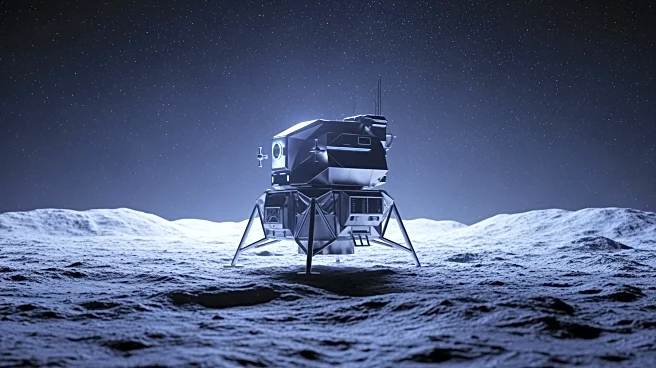
capable of meeting the requirements for the next phase of lunar delivery services. The CLPS 2.0 contract is a continuation of NASA's existing CLPS contracts, which focus on utilizing U.S.-manufactured space vehicles, including landers and transporters, for lunar missions. The solicitation seeks to support the safe integration, transportation, and operation of NASA-sponsored payloads using contractor-furnished capabilities such as launch vehicles, lunar landers, and Earth re-entry vehicles. Interested firms are invited to submit their responses by February 5, 2026.
Why It's Important?
The CLPS 2.0 contract represents a significant step in NASA's efforts to expand commercial lunar delivery services. By engaging with industry stakeholders, NASA aims to refine its acquisition strategy and ensure the successful deployment of scientific payloads to the Moon. This initiative is crucial for advancing lunar exploration and supporting future missions, including those targeting the Moon's south pole. The involvement of commercial partners is expected to enhance innovation and efficiency in space exploration, potentially reducing costs and accelerating timelines. Companies like Intuitive Machines and Firefly Aerospace have already secured substantial contracts under the CLPS program, highlighting the growing role of private industry in space exploration.
What's Next?
As NASA collects feedback from potential contractors, the agency will evaluate the responses to shape the final acquisition strategy for the CLPS 2.0 contract. This process will determine the selection of contractors who will provide the necessary capabilities for upcoming lunar missions. The continued collaboration between NASA and commercial partners is expected to drive technological advancements and facilitate the delivery of critical scientific instruments to the lunar surface. The outcomes of this solicitation will likely influence the planning and execution of future lunar exploration missions, contributing to NASA's long-term goals of sustainable lunar presence and exploration.