
What's Happening?
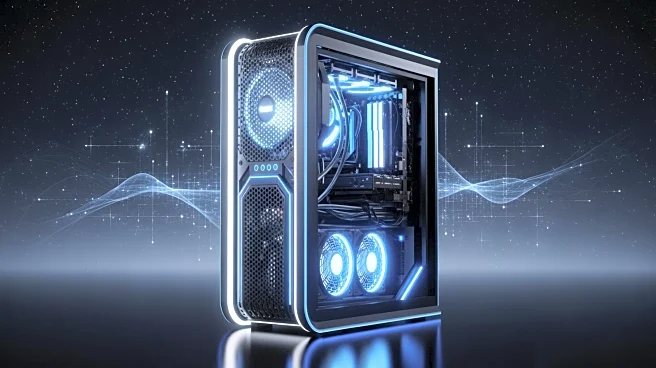
NASA has launched its latest supercomputer, Athena, at the Ames Research Center in California. This advanced system is part of NASA's High-End Computing Capability project and is designed to support a new
generation of missions and research. Athena surpasses previous systems in both power and efficiency, offering over 20 petaflops of peak performance. It will aid in simulating rocket launches, designing next-generation aircraft, and training large-scale AI models. The supercomputer is available to NASA researchers and external scientists who can apply for access. Athena's name was chosen through a contest among NASA's computing workforce.
Why It's Important?
The introduction of Athena marks a significant advancement in NASA's computational capabilities, crucial for the agency's ambitious space exploration and research goals. By providing enhanced computational power, Athena will enable more complex simulations and data analyses, potentially leading to breakthroughs in aeronautics and space science. This development also reflects NASA's commitment to maintaining its leadership in technological innovation. The supercomputer's capabilities could accelerate the pace of discovery and innovation, benefiting not only NASA but also the broader scientific community involved in collaborative projects.
What's Next?
As NASA continues to expand its High-End Computing Capability portfolio, further investments in supercomputing are anticipated. This will likely involve integrating Athena with other computing resources, such as commercial cloud platforms, to provide a flexible and efficient research environment. The ongoing development of supercomputing infrastructure will support NASA's future missions, including those related to the Artemis program and deep space exploration. Researchers will continue to explore new applications for Athena, potentially leading to novel scientific insights and technological advancements.