






What's Happening?
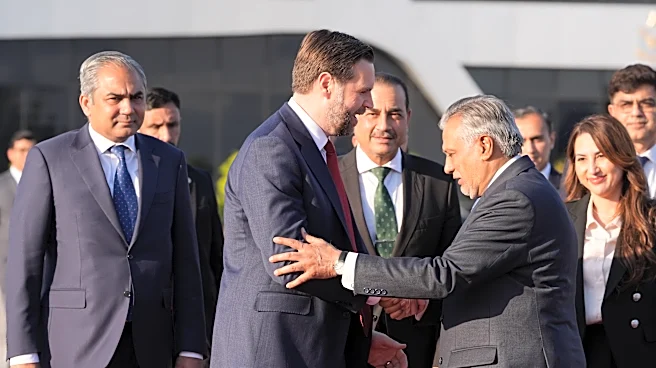
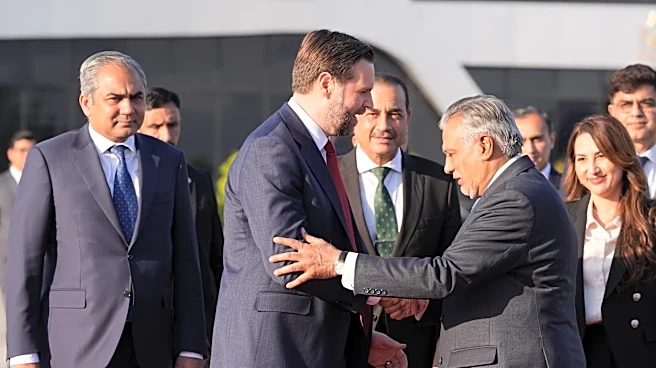
Pakistan hosted the U.S.-Iran ceasefire talks in Islamabad, aiming to increase its regional influence. The talks ended without an agreement, with both sides blaming each other for the failure. Pakistan's Foreign Minister Ishaq Dar emphasized the importance
of maintaining the ceasefire. Vice President JD Vance led the U.S. delegation, highlighting his role in foreign policy. The talks were part of Pakistan's efforts to assert its role in regional and global issues, amidst its domestic challenges.
Why It's Important?
The collapse of the talks raises concerns about the future of the ceasefire and the potential for renewed conflict. Pakistan's involvement in hosting the talks reflects its strategic positioning in regional affairs, with ties to the U.S., China, and Saudi Arabia. The situation underscores the complexities of international diplomacy and the challenges in resolving long-standing geopolitical conflicts. The outcome of these talks could have long-term implications for regional power dynamics and Pakistan's role in global affairs.
What's Next?
Pakistan's foreign minister has expressed a desire to facilitate further dialogue between the U.S. and Iran. However, the perception of victory on both sides complicates the prospects for compromise. President Trump has threatened a naval blockade of the Strait of Hormuz, while Iran remains firm on its demands. The next steps will likely involve continued diplomatic efforts to prevent escalation and find a mutually acceptable resolution.
Beyond the Headlines
The talks highlight the broader geopolitical dynamics, with Pakistan seeking to assert its influence in regional affairs. The involvement of Vice President Vance and other U.S. officials indicates a strategic shift in U.S. foreign policy. The situation also reflects the ongoing tensions between military strategies and diplomatic negotiations, with both sides wary of being perceived as conceding too much. The outcome of these talks could have long-term implications for U.S.-Iran relations and regional power balances.