





What's Happening?
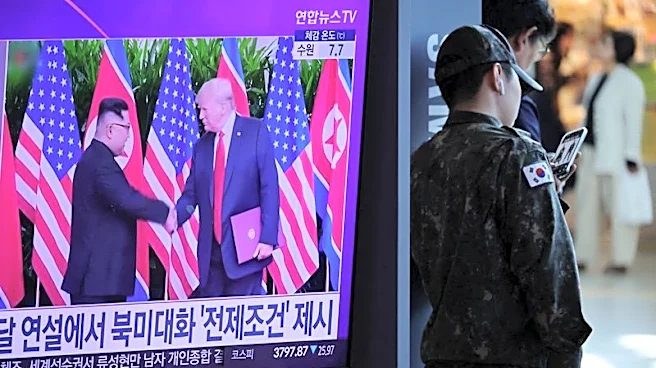
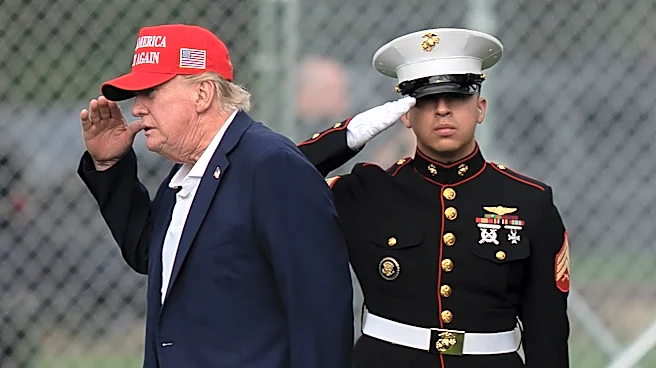
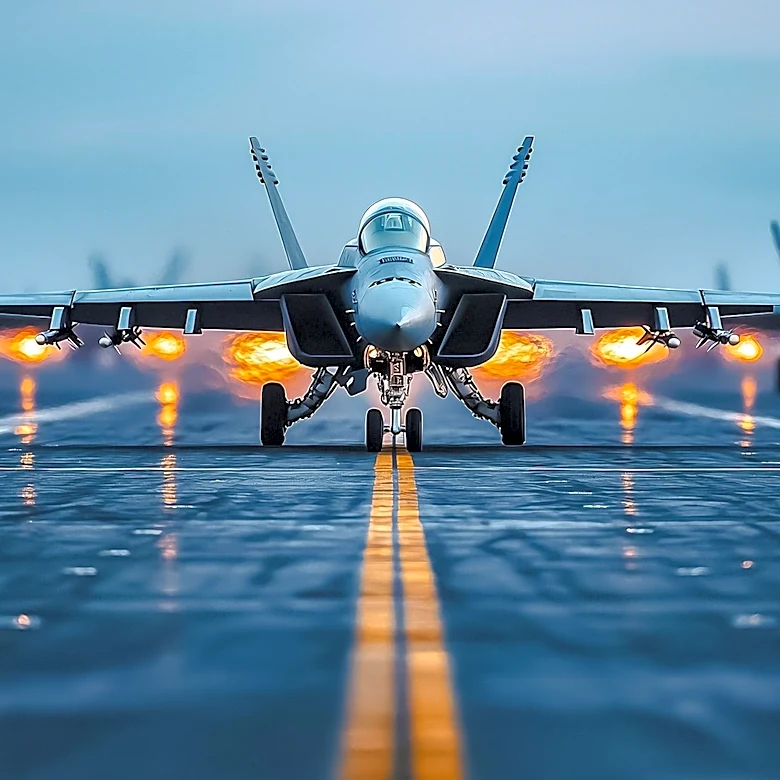
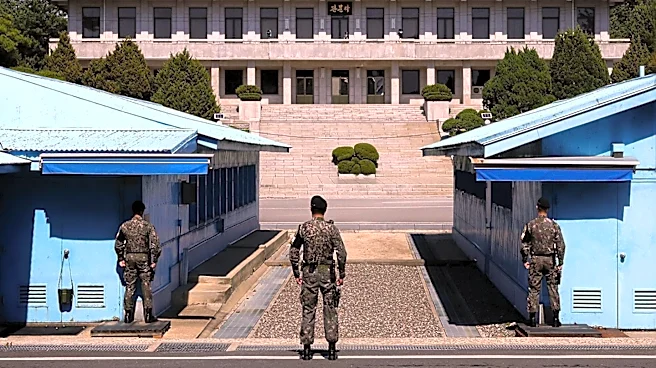
U.S. Senator Jack Reed, the leading Democrat on the Armed Services Committee, has criticized President Trump's decision to significantly reduce the scale of joint military exercises between the U.S. and South Korea. President Trump announced a 'considerable
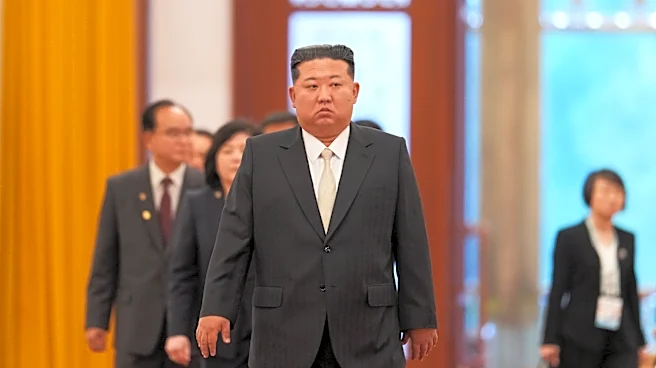
reduction' in U.S. participation in these annual exercises, which commenced shortly after his announcement. He cited his 'very good relationship with Kim Jong Un,' the North Korean leader, as a primary reason for this decision. South Korean authorities, however, confirmed that the joint maneuvers began as scheduled. President Trump also mentioned Seoul's non-participation in U.S. military operations against Iran as a justification for the reduced U.S. involvement. Senator Reed labeled President Trump's decision as 'stupid and incoherent,' expressing concern that it signals to adversaries like China and Russia that America's allies can be easily abandoned. He further stated that President Trump's actions, whether to appease a dictator or to penalize South Korea for not joining a war, make America's commitments appear negotiable to both allies and adversaries.
Why It's Important?
This development carries significant implications for U.S. foreign policy and regional stability in East Asia. The reduction in joint military exercises could be perceived as a weakening of the U.S.-South Korea alliance, potentially emboldening North Korea and other regional actors. Senator Reed's comments highlight concerns that such actions undermine the credibility of U.S. security commitments, which could have long-term consequences for alliances globally. The decision also raises questions about the U.S. approach to denuclearization negotiations with North Korea, as President Trump's rationale links the exercises to his personal relationship with Kim Jong Un. Furthermore, the mention of South Korea's non-involvement in operations against Iran introduces a new dimension to alliance dynamics, suggesting that U.S. military support might be contingent on participation in other U.S. foreign policy objectives. This could create friction and uncertainty among U.S. allies regarding the terms of their security partnerships.
What's Next?
The immediate future will likely involve continued scrutiny from U.S. lawmakers and international observers regarding the impact of these reduced military exercises. South Korea will need to assess the implications for its defense posture and potentially adjust its own military strategies. North Korea's reaction to this development will be closely watched, as it could influence future denuclearization talks or regional provocations. The U.S. administration may face pressure to clarify its long-term strategy for the Korean Peninsula and its alliances. There could also be further debate within the U.S. Congress about the executive branch's authority to unilaterally alter military commitments with allies. The broader geopolitical landscape, particularly the actions of China and Russia, will also be a factor, as they may interpret this as an opportunity to test U.S. resolve and influence in the region.
Beyond the Headlines
Beyond the immediate military and diplomatic implications, this situation touches upon the fundamental nature of alliances and the role of personal diplomacy in international relations. Senator Reed's assertion that President Trump's actions are driven by 'ego' rather than strategic considerations raises questions about the stability and predictability of U.S. foreign policy. The idea that a dictator gains a 'propaganda victory' while a key ally is 'punished' suggests a potential shift in the traditional balance of power and influence. This could lead to a re-evaluation by U.S. allies of their reliance on American security guarantees and potentially encourage them to seek alternative security arrangements or greater autonomy. The incident also highlights the ongoing tension between a transactional approach to foreign policy and a more traditional, alliance-based framework, with potential long-term consequences for global security architecture.