
What's Happening?
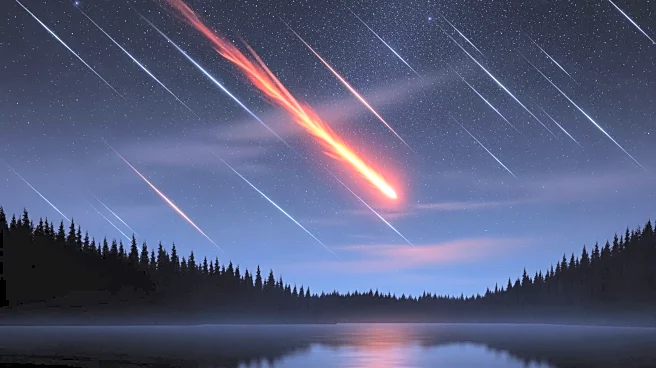
Residents across New York and the East Coast reported witnessing a bright fireball streaking across the sky on the night of December 7. This event coincides with the active period of the Geminid meteor
shower, which is expected to peak overnight on December 13 and 14. The Geminid meteor shower, originating from the debris of the rock comet 3200 Phaethon, is known for its high meteor count, averaging around 150 meteors per hour. The American Meteor Society received numerous reports of the fireball, with its visible light trail reportedly ending over Poughkeepsie. This period is particularly exciting for astronomy enthusiasts, as it follows the appearance of the Cold Moon, which was visible just after sunset.
Why It's Important?
The Geminid meteor shower is one of the most anticipated astronomical events of the year, offering a spectacular display for both amateur and professional astronomers. The high visibility of meteors during this period provides a unique opportunity for educational and recreational activities related to astronomy. The widespread reports of the fireball highlight the public's growing interest in celestial events, potentially boosting local tourism to observatories and dark sky parks. Additionally, such events can inspire interest in space science and exploration, contributing to educational initiatives and public engagement with scientific research.
What's Next?
As the Geminid meteor shower continues through December 24, observers are encouraged to find dark locations away from city lights to maximize their viewing experience. The peak nights of December 13 and 14 are expected to offer the best views, with the highest meteor rates occurring around 2:00 a.m. Local observatories and astronomy clubs may organize viewing events, providing telescopes and expert guidance to enhance the experience. The continued interest in such celestial events may lead to increased investment in public astronomy facilities and educational programs.