







What's Happening?
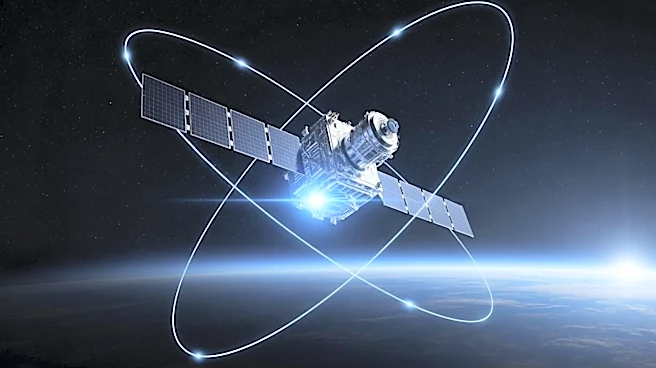
The U.S. Department of the Air Force has announced the awarding of the base contract for new space-based air moving target indication (AMTI) systems. This development was revealed by Air Force Secretary Troy Meink during the Space Foundation's annual
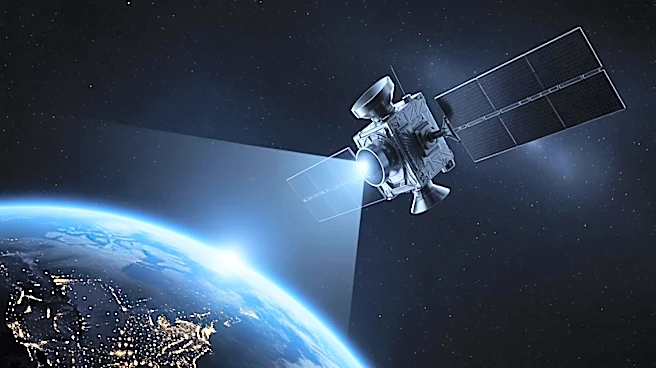
Space Symposium. The contract involves multiple undisclosed vendors under an indefinite-delivery, indefinite-quantity agreement. The Air Force has issued a classified request for information regarding a radar space-based AMTI capability, with the first operational satellite contract expected to be awarded soon. The U.S. Space Force's fiscal 2027 budget request includes $7 billion in procurement funds for these new AMTI satellites, a significant increase from the $2 billion allocated in the 2025 budget reconciliation bill. This funding boost reflects confidence in the technical maturity of space-based AMTI systems, supported by recent and future prototype demonstrations.
Why It's Important?
The development and deployment of space-based AMTI systems mark a strategic shift for the U.S. Air Force, moving from airborne systems to orbital capabilities. This transition is crucial for enhancing the military's ability to detect and track moving targets from space, providing a broader and more comprehensive surveillance capability. The significant investment in these systems underscores their importance in national defense strategy, potentially offering superior tracking and data fusion capabilities. This advancement could lead to improved situational awareness and decision-making for military operations, impacting defense policy and military readiness. The collaboration with Congress on the future of the Boeing E-7A Wedgetail aircraft also highlights the integration of new technologies with existing systems, ensuring a cohesive approach to national defense.
What's Next?
The Air Force is expected to continue its collaboration with Congress to align on the future of related aircraft systems, such as the Boeing E-7A Wedgetail. As the procurement of AMTI satellites progresses, the Air Force will likely focus on integrating these new systems with existing platforms to enhance data fusion and operational capabilities. The ongoing development and deployment of these systems will be closely monitored by defense stakeholders, with potential adjustments to funding and strategy based on technological advancements and operational needs.