






What's Happening?
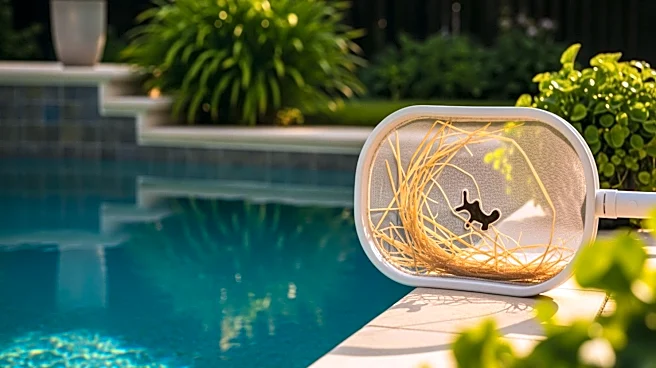
Michele Strom, a former University of Denver gymnast and one-time Mrs. Nebraska, was asked by her husband to check their pool skimmer while he was out golfing. Initially reluctant due to the possibility of encountering a snake or spider, Strom eventually
discovered a baby bunny trapped in the skimmer. The incident was documented in a TikTok video, highlighting the common issue of small wildlife getting trapped in backyard pools. The couple uses a gender-based division of labor, humorously referring to tasks like skimmer checks as 'blue jobs.' The discovery of the bunny, which was initially mistaken for something else, was unexpected and emotional for Strom.
Why It's Important?
This incident underscores a broader issue of wildlife safety around residential pools. With millions of pools across the U.S., small animals often find themselves trapped, leading to significant wildlife mortality. The story highlights the need for pool owners to consider wildlife-friendly solutions, such as escape ramps, to prevent such occurrences. This not only protects local wildlife but also raises awareness about the environmental impact of human infrastructure on animal habitats. The viral nature of the TikTok video also demonstrates the power of social media in bringing attention to everyday environmental issues.
What's Next?
Following the incident, there may be increased interest in solutions to prevent wildlife from getting trapped in pools. Homeowners might explore installing critter ramps or netting to safeguard animals. Additionally, the story could prompt discussions on social media about responsible pool ownership and wildlife protection. As more people become aware of the issue, there could be a push for community or legislative action to encourage or mandate wildlife-friendly pool designs.
Beyond the Headlines
The incident also touches on gender roles in household tasks, as highlighted by the couple's 'blue jobs' and 'pink jobs' system. This humorous take on traditional gender roles may resonate with many households, sparking conversations about how chores are divided. Furthermore, the emotional response to the trapped bunny reflects a broader human connection to wildlife and the natural world, emphasizing the importance of empathy and conservation efforts.