
What's Happening?
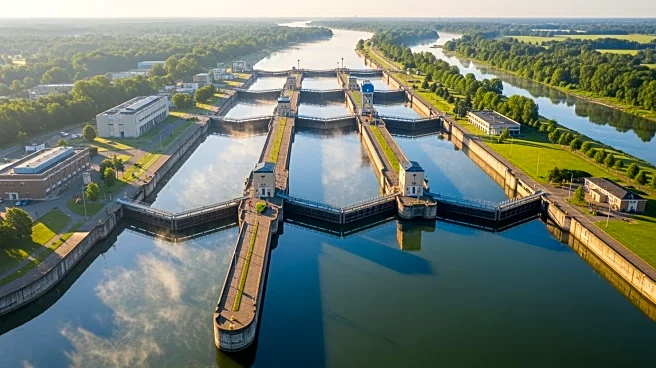
A study by HDR, Inc., commissioned by the Waterways Council, Inc. (WCI), examines the challenges faced by the U.S. Army Corps of Engineers in delivering inland waterway capital projects, such as locks
and dams. The study identifies systemic issues leading to cost overruns and delays, despite recent funding boosts from the 2021 bipartisan infrastructure bill. Key recommendations include treating the waterways as a holistic system, improving cost estimation, and utilizing standard designs. The study emphasizes the need for collaboration among the Corps, industry, Congress, and the Administration to enhance project execution and reliability.
Why It's Important?
The efficient delivery of inland waterway projects is crucial for the U.S. economy, as these infrastructures support critical transportation and commerce activities. Delays and cost overruns can hinder economic benefits and impact industries reliant on these waterways. The study's recommendations aim to streamline project delivery, ensuring that the infrastructure meets modern demands and supports economic growth. By addressing these challenges, the Corps can improve the reliability and efficiency of the nation's inland waterways, which are vital for trade and transportation.
What's Next?
Implementing the study's recommendations requires support from the Office of Management and Budget (OMB) and alignment with the Capital Investment Strategy. The Corps is encouraged to adopt a systemic approach to project management and seek OMB's participation in funding and execution strategies. Continued collaboration among stakeholders is essential to overcome existing challenges and improve the delivery of critical infrastructure projects. The focus will be on enhancing coordination and applying lessons learned across projects to ensure timely and cost-effective completion.