






What's Happening?
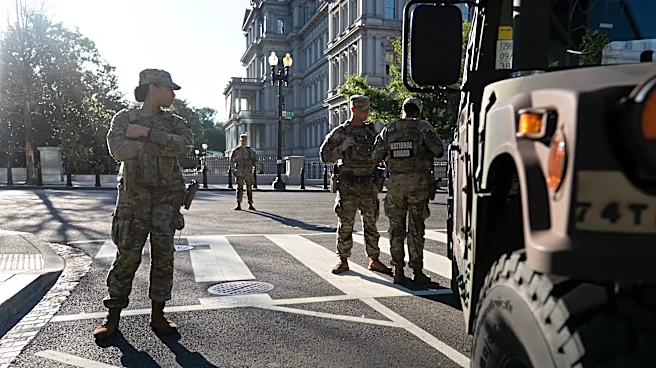
The District of Columbia has agreed to pay $50,000 to settle a lawsuit filed by Sam O'Hara, who accused police officers of illegally detaining him during a protest. O'Hara, an artist, was detained for playing 'The Imperial March' from 'Star Wars' on his
cellphone while following an Ohio National Guard patrol. This act was a protest against President Trump's federal law enforcement surge in Washington, D.C. The settlement, which includes attorney's fees and costs, was disclosed in a court filing. O'Hara, represented by the ACLU, agreed to drop his claims against the district and the Metropolitan Police Department officers. The settlement does not admit any wrongdoing by the district. However, O'Hara's claims against an Ohio National Guard member remain unresolved.
Why It's Important?
This settlement highlights ongoing tensions between law enforcement and citizens exercising their rights to protest. The case underscores the importance of protecting First Amendment rights, particularly in politically charged environments. The financial settlement, while not an admission of guilt, reflects the district's willingness to resolve disputes over alleged civil rights violations. It also raises questions about accountability, as O'Hara expressed concerns about taxpayers bearing the financial burden rather than the individuals involved. This case may influence future interactions between law enforcement and protesters, emphasizing the need for clear guidelines and accountability in handling protests.
What's Next?
O'Hara's settlement with the district does not resolve his claims against the Ohio National Guard member involved. Sgt. Devon Beck, the guard member, has requested a judge to dismiss the claims against him. The outcome of this request could set a precedent for how similar cases are handled in the future. Additionally, the settlement may prompt discussions on policy changes within law enforcement agencies to prevent similar incidents. The ACLU's involvement suggests continued advocacy for civil rights protections, potentially leading to further legal actions or policy recommendations.