








What's Happening?
A bipartisan bill, the Precision Agriculture Workforce Training and Development Act, has been reintroduced in Congress to address the growing need for skilled labor in the precision agriculture industry. The bill, supported by Representatives Mike Flood
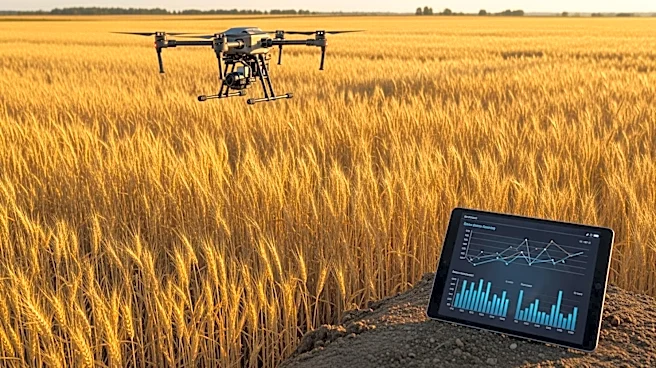
and Joe Neguse, seeks to direct the U.S. Department of Agriculture to prioritize federal funding for precision agriculture research through cooperative education at colleges and universities. This initiative aims to fill the workforce gaps as more farmers adopt data-driven agricultural technologies. Kurtis Charling, vice president of Global Ag Tech Product and Strategy at Lindsay, highlighted the increasing demand for skilled labor in rural communities where precision agriculture technologies are being implemented. The bill has been included in the House-approved farm bill and is now awaiting consideration in the Senate.
Why It's Important?
The introduction of this bill is significant as it addresses the critical shortage of skilled labor in the precision agriculture sector, which is essential for the industry's growth and technological advancement. By prioritizing education and training, the bill aims to equip the future workforce with the necessary skills to operate advanced agricultural technologies, thereby enhancing productivity and efficiency in farming. This initiative could lead to increased adoption of precision agriculture practices, which are vital for sustainable farming and resource management. The bill's success could also set a precedent for similar initiatives in other sectors facing skilled labor shortages.
What's Next?
The bill's progression to the Senate marks a crucial step in its potential enactment. If passed, it will facilitate the establishment of educational programs and partnerships aimed at training students in precision agriculture. Stakeholders, including educational institutions and agricultural businesses, are likely to support the bill, given its potential to address workforce challenges and promote technological innovation in agriculture. The outcome of the Senate's decision will determine the future of this initiative and its impact on the precision agriculture industry.