



What's Happening?
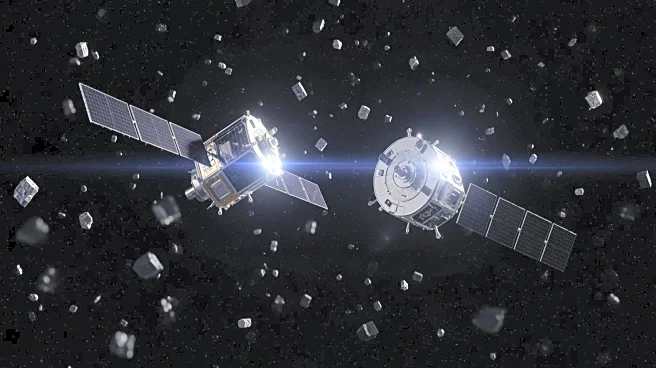
A new study highlights the increasing risk of satellite collisions in Earth's orbit, with a potential collision occurring in just 2.8 days if satellites lose maneuverability. This risk is attributed to the rapid increase in the number of satellites, particularly
from SpaceX's Starlink constellation. The study introduces the Collision Realization And Significant Harm (CRASH) Clock, a metric to quantify collision risk. The crowded orbit necessitates frequent collision avoidance maneuvers, with SpaceX reporting over 144,000 such maneuvers in a six-month period. The study underscores the challenges of managing space traffic as more satellites are launched.
Why It's Important?
The growing congestion in Earth's orbit poses significant risks to satellite operations and the services they support, such as GPS and communications. A collision could generate debris that endangers other satellites and potentially renders parts of the orbit unusable. This situation highlights the need for improved space traffic management and international cooperation to prevent catastrophic events. The increasing number of satellites also raises questions about the sustainability of current practices and the need for regulatory frameworks to ensure safe and responsible use of space.
What's Next?
As more satellites are launched, the CRASH Clock is expected to decrease further, increasing the likelihood of collisions. This may prompt calls for stricter regulations and improved technologies for collision avoidance. Stakeholders, including governments and private companies, may need to collaborate on solutions to manage space traffic effectively. The development of new policies and technologies will be crucial to maintaining the safety and sustainability of satellite operations in an increasingly crowded orbit.