
What's Happening?
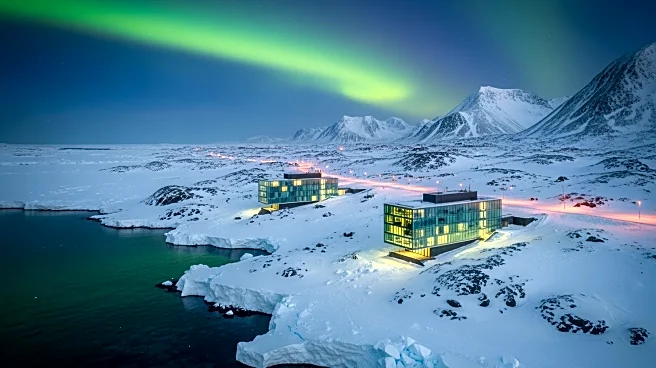
President Donald Trump has announced a 10% tariff on goods from eight European countries, escalating tensions over the U.S.'s interest in acquiring Greenland. The tariffs, which could increase to 25% by
June, target Denmark, Norway, Sweden, France, Germany, the United Kingdom, the Netherlands, and Finland. This move is seen as leverage to force negotiations over Greenland, a semiautonomous territory of Denmark. European countries have responded by deploying troops to Greenland for Arctic security training, emphasizing their support for Greenland's autonomy. The tariffs have sparked criticism from European leaders and U.S. politicians, who warn of potential economic and diplomatic fallout.
Why It's Important?
The imposition of tariffs by President Trump could strain U.S.-European relations, potentially leading to economic repercussions for both sides. The tariffs may increase costs for American consumers as companies pass on the additional expenses. Furthermore, the move could weaken transatlantic alliances, providing strategic advantages to global competitors like China and Russia. The situation underscores the geopolitical significance of the Arctic region and the strategic importance of Greenland, which is rich in natural resources and holds a key position in Arctic security.
What's Next?
European Union ambassadors have scheduled emergency talks to formulate a response to the tariffs. Meanwhile, a bipartisan U.S. congressional delegation is visiting Copenhagen and Greenland to reassure allies of continued diplomatic ties. The situation remains fluid, with potential for further diplomatic negotiations or retaliatory measures from European nations. The outcome could influence future U.S. foreign policy and trade relations with Europe.