





What's Happening?
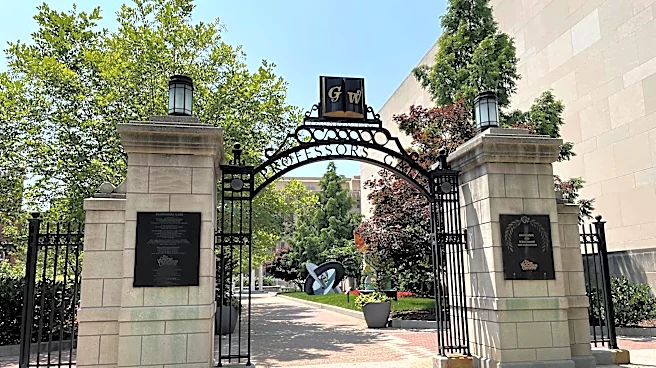
Two schools at George Washington University (GW), the Graduate School of Education and Human Development (GSEHD) and the School of Business (GWSB), are pausing admissions for their doctoral programs for the 2027-28 academic year. This decision comes as other
programs within the Columbian College of Arts & Sciences (CCAS) that previously paused admissions will resume accepting funded students. University spokesperson Shannon McClendon stated that these pauses are part of an assessment of admissions plans, focusing on supporting current students, meeting existing funding commitments, and maintaining the quality of doctoral education. The pauses do not necessarily indicate long-term closures but are efforts to manage new funding commitments and provide competitive funding opportunities. This trend aligns with wider national declines in Ph.D. enrollment at research universities, often attributed to budget constraints, rising stipend costs, union activities, and weak job prospects for graduates. Major U.S. research universities saw a 15% reduction in doctoral program applicants for fall 2026 compared to fall 2025, marking the second consecutive year of decreased enrollment, according to the Association of American Universities.
Why It's Important?
The decision by GW to pause doctoral admissions in certain schools, alongside a national trend of declining Ph.D. enrollment, highlights significant financial pressures and evolving priorities within higher education. For prospective doctoral students, this means fewer opportunities for advanced study and funded positions, potentially impacting career paths in academia and research. For universities, reduced enrollment in Ph.D. programs can lead to a shortage of research and teaching assistants, affecting the capacity for faculty research and undergraduate instruction. The increased costs associated with stipends, particularly in light of new graduate student union contracts like the one at GW which raises minimum pay for teaching assistants, further strain university budgets. This situation could lead to a re-evaluation of doctoral program structures, funding models, and the overall value proposition of Ph.D. education in the U.S., potentially shifting the landscape of academic research and development.
What's Next?
GW's GSEHD plans to resume admissions in fall 2028, using the pause to refine its program and improve external grant funding, while GWSB extends its pause for a second year due to a lack of funding. The university will continue to assess admissions plans, with decisions guided by the number of students on guaranteed funding and available grant funding. The impact of the graduate student union contract, which mandates a significant increase in minimum pay for graduate teaching assistants, will likely continue to influence funding decisions and cohort sizes. Other GW schools, including Milken Institute School of Public Health, School of Medicine & Health Sciences, School of Nursing, and School of Engineering & Applied Science, will continue to accept applications for fall 2027. The broader trend of declining Ph.D. enrollment nationally suggests that other U.S. universities may also implement similar admissions pauses or reductions in the coming years as they grapple with budget constraints and the changing landscape of higher education.
Beyond the Headlines
The challenges faced by GW and other U.S. universities in funding doctoral programs and attracting students point to deeper systemic issues within the academic ecosystem. The rising cost of higher education, coupled with a competitive job market for Ph.D. graduates, is forcing institutions to reconsider the sustainability and relevance of their doctoral offerings. This situation could lead to a greater emphasis on interdisciplinary programs, increased reliance on external grant funding, and potentially a shift towards more professionally oriented doctoral degrees. The role of graduate student unions in advocating for better compensation also adds a new layer of complexity to university budgeting and planning. Ultimately, these developments could reshape the future of academic research and the pipeline of highly skilled professionals in various fields across the United States.