
What's Happening?
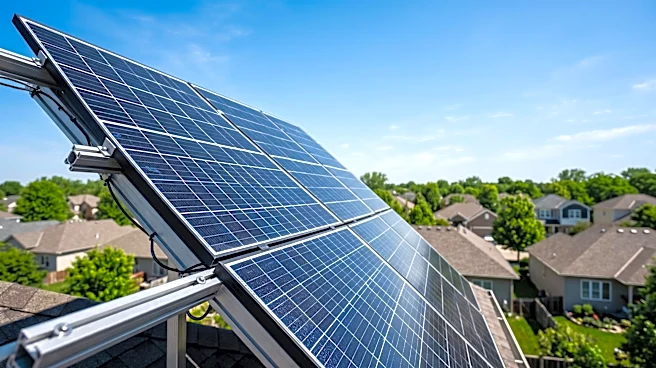
Massachusetts is actively promoting agrivoltaics, also known as dual-use solar, a method that integrates solar panel installations with active agricultural operations. This approach allows for simultaneous energy generation and farming, with solar panels
erected above crops or livestock. The state became the first in the U.S. in 2018 to offer financial incentives specifically for such projects. Under its solar incentive program, projects with a capacity between 1 MW and 5 MW receive a base rate of 23.17 cents per kilowatt-hour, with agrivoltaic projects earning an additional 9 cents per kilowatt-hour. This initiative is a key component of Massachusetts' strategy to achieve net-zero carbon emissions by 2050. Two cranberry bogs in Kingston and Plymouth are currently operating with solar installations overhead, marking the first such projects globally to grow cranberries beneath panels. These projects, developed by Distributed Energy Infrastructure, demonstrate the feasibility of this dual-use model, even overcoming unique engineering challenges posed by bog environments.
Why It's Important?
The adoption and incentivization of agrivoltaics in Massachusetts hold significant implications for land use, renewable energy expansion, and agricultural sustainability across the U.S. By combining solar energy production with farming, the state addresses the growing challenge of siting solar projects in densely populated areas without sacrificing valuable agricultural land. This model offers a financial lifeline to farmers, particularly those with protected wetlands like cranberry bogs, which cannot be developed for other purposes even if they cease agricultural production. The success of these pioneering cranberry bog projects could serve as a blueprint for other states facing similar land-use conflicts and renewable energy goals. It demonstrates a viable path for increasing clean energy capacity while supporting local economies and preserving agricultural heritage, potentially mitigating opposition to solar development and accelerating the transition to renewable energy nationwide.
What's Next?
The success of agrivoltaic projects in Massachusetts is expected to drive further development and adoption of this model. Prateek Tare, co-founder of Distributed Energy Infrastructure, anticipates that future cranberry projects will become easier as lessons learned are applied. His company is already expanding into other agricultural settings, including apple orchards, cattle pastures, and Christmas tree farms. There is also potential for stalled projects, such as a cranberry solar project in Carver, to be revitalized, with new owners expressing intent to complete them. As more states observe the economic and environmental benefits, similar incentive programs and dual-use solar projects could emerge across the U.S., fostering innovation in agricultural and energy sectors. The continued evolution of agrivoltaics could lead to standardized practices and technologies, making it a more accessible and widespread solution for sustainable land management and renewable energy generation.
Beyond the Headlines
The integration of solar technology with agriculture, as exemplified by Massachusetts' agrivoltaics initiative, represents a deeper shift in how society views and utilizes land resources. It challenges the traditional dichotomy between industrial development and environmental preservation, proposing a synergistic model where both can coexist and thrive. This approach could lead to significant long-term cultural and economic impacts, fostering a more sustainable relationship between human activity and natural ecosystems. Ethically, it promotes responsible land stewardship by maximizing productivity without compromising ecological integrity. Legally, it may necessitate new regulatory frameworks and zoning laws to accommodate and encourage such innovative land-use practices. Culturally, it could reshape public perception of renewable energy, moving it from a perceived competitor for land to a beneficial partner for agriculture, ultimately accelerating the broader acceptance and implementation of clean energy solutions.