
What's Happening?
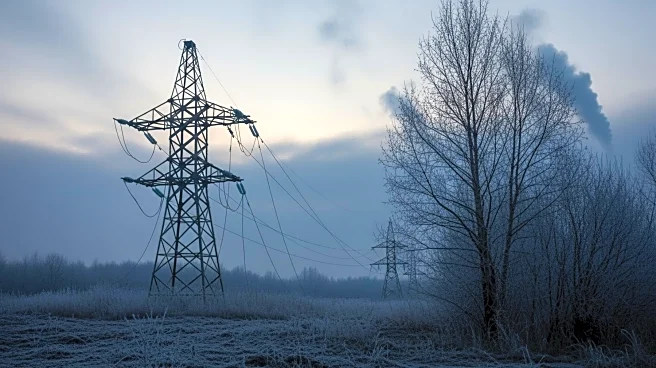
Ukrainians are enduring severe winter conditions as Russian forces continue to target the country's energy infrastructure. Recent attacks have left many without power, exacerbating the challenges posed
by one of the harshest winters in 20 years. In Kyiv, temperatures have plummeted to -19 degrees Celsius, and residents are struggling to stay warm amid frequent power outages. The Ukrainian government has declared a state of emergency for the energy sector, with President Volodymyr Zelensky acknowledging the severe impact of the strikes. Despite the adversity, Ukrainians are finding ways to cope, using alternative heating methods and community support to endure the cold.
Why It's Important?
The ongoing attacks on Ukraine's energy infrastructure have significant implications for the country's resilience and humanitarian situation. The strikes have left millions without reliable access to electricity and heating, posing a severe threat to public health and safety during the winter months. The international community has condemned these actions, viewing them as violations of human rights and potential crimes against humanity. The situation highlights the broader geopolitical tensions and the humanitarian crisis resulting from the conflict, affecting not only Ukraine but also international relations and global energy security.
What's Next?
As the conflict continues, Ukraine is likely to seek further international support to bolster its energy infrastructure and humanitarian aid. The government may implement additional measures to protect critical infrastructure and support affected populations. International organizations and Ukraine's allies are expected to increase pressure on Russia to cease targeting civilian infrastructure. The resilience of the Ukrainian people will be tested as they navigate the ongoing challenges posed by the conflict and harsh winter conditions.
Beyond the Headlines
The situation in Ukraine underscores the broader ethical and legal implications of targeting civilian infrastructure during conflicts. It raises questions about the responsibilities of warring parties to protect civilians and the role of international law in addressing such violations. The resilience and adaptability of the Ukrainian people in the face of adversity may also lead to long-term societal changes, fostering a culture of preparedness and community solidarity.