
What's Happening?
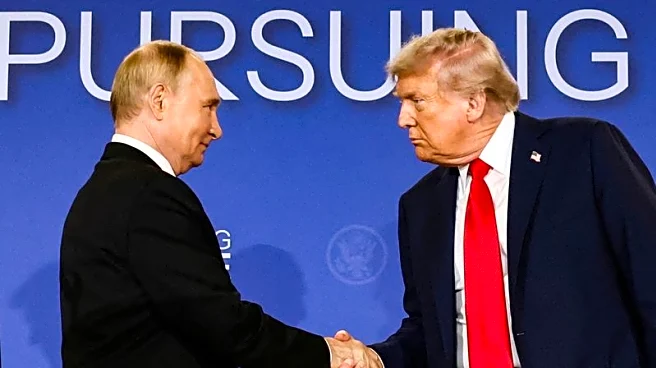
President Trump has announced the creation of a 'Board of Peace' aimed at addressing global conflicts, a move perceived as an attempt to bypass the United Nations Security Council. This initiative is part
of a broader U.S. strategy to reform international peacekeeping efforts, which Trump argues have been ineffective, particularly in conflicts like those in Gaza and Ukraine. The Board of Peace is intended to serve as a mediator in global disputes, potentially rivaling the U.N. Security Council's traditional role. The U.N. has been undergoing reforms to modernize and streamline its operations, partly in response to the U.S. reducing its financial contributions. Despite Trump's criticisms, he acknowledges the U.N.'s potential and suggests it should continue to exist. The Board of Peace has already been authorized to oversee a U.S.-brokered ceasefire in Gaza, but its broader role remains uncertain.
Why It's Important?
The establishment of the Board of Peace signifies a significant shift in U.S. foreign policy, potentially undermining the authority of the U.N. Security Council. This move could alter the dynamics of international diplomacy, as the U.S. seeks to assert more direct control over global conflict resolution. The initiative reflects ongoing tensions between the U.S. and the U.N., with the former criticizing the latter's inefficiencies and ideological leanings. If successful, the Board of Peace could reshape how international peace efforts are coordinated, impacting countries involved in conflicts and those reliant on U.N. mediation. The U.S.'s largest donor status to the U.N. adds weight to these developments, as financial leverage could influence the organization's future operations.
What's Next?
The future of the Board of Peace and its impact on the U.N. will depend on the level of international support it receives. Some countries, including several Muslim nations, have accepted invitations to join the board, while others, like France, have declined. The response from major powers such as Russia, China, and Britain remains to be seen. The board's effectiveness and acceptance will likely influence its ability to mediate conflicts beyond Gaza. The U.N. will need to navigate these changes carefully to maintain its role in global peacekeeping. The outcome of this initiative could set a precedent for how international organizations and national governments collaborate on conflict resolution in the future.
Beyond the Headlines
The creation of the Board of Peace raises questions about the future of multilateralism and the role of international institutions in a rapidly changing geopolitical landscape. The U.N.'s ability to adapt to these challenges will be crucial in maintaining its relevance. The board's establishment also highlights the growing trend of countries seeking greater strategic autonomy, as noted by Canadian Prime Minister Mark Carney. This shift could lead to a more fragmented international order, with countries prioritizing national interests over collective problem-solving. The ethical implications of bypassing established international frameworks for peacekeeping could also spark debates about the legitimacy and accountability of such initiatives.