







What's Happening?
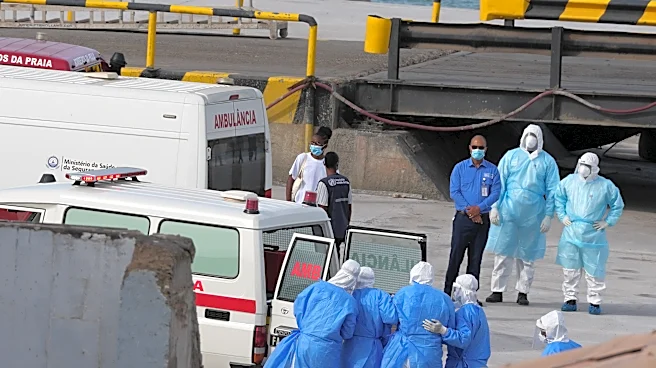
The Centers for Disease Control and Prevention (CDC) is facing criticism for its muted response to a hantavirus outbreak on a cruise ship involving American passengers. Unlike its proactive role during the 2020 Diamond Princess COVID-19 outbreak, the CDC has
been less visible and slower to act in this situation. The outbreak, which began with a Dutch passenger on a cruise from Argentina, has resulted in several illnesses and deaths. The CDC's delayed response has raised concerns about its current role in global health emergencies, with experts noting that other countries have taken the lead in managing the outbreak.
Why It's Important?
The CDC's response to the hantavirus outbreak is significant as it highlights potential weaknesses in the U.S. public health system's ability to handle international health crises. The agency's diminished role could impact its credibility and effectiveness in future outbreaks, potentially affecting public trust and international cooperation. The situation underscores the need for robust and timely responses to health threats to prevent widespread transmission and ensure public safety. The criticism also reflects broader concerns about the CDC's standing and resources following recent administrative changes.
What's Next?
The CDC has begun to take action by sending teams to Spain's Canary Islands and Nebraska to assist with the situation. The agency has also issued health alerts to U.S. doctors about the potential for imported cases. Moving forward, the CDC will need to rebuild its reputation and demonstrate its capability to manage international health threats effectively. This may involve increasing transparency, improving communication with international partners, and ensuring adequate resources and staffing to respond to future outbreaks.