








What's Happening?
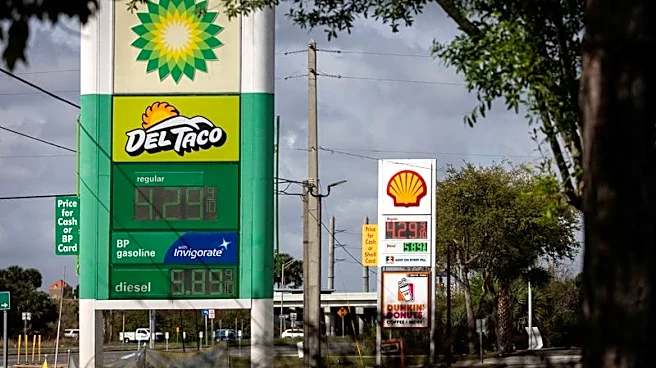
The American Automobile Association (AAA) has reported that gas prices in the United States have remained steady despite a recent decrease in global oil prices. The national average for regular gasoline is currently $4.06 per gallon. In Texas, the average price is slightly
lower at $3.69 per gallon. This situation is largely attributed to ongoing tensions in the Middle East, which have not significantly alleviated the cost of fuel in the U.S. The stability in gas prices comes as a surprise given the dip in global oil costs, highlighting the complex factors that influence fuel pricing domestically.
Why It's Important?
The persistence of high gas prices in the U.S. has significant implications for consumers and the broader economy. High fuel costs can lead to increased transportation expenses, affecting everything from individual commuting costs to the price of goods transported across the country. This can contribute to inflationary pressures, impacting the cost of living for many Americans. Additionally, sustained high gas prices can influence consumer behavior, potentially reducing discretionary spending and affecting economic growth. The situation underscores the vulnerability of the U.S. economy to geopolitical events and the importance of energy policy in mitigating such impacts.
What's Next?
If tensions in the Middle East continue, it is likely that gas prices will remain elevated, despite fluctuations in global oil prices. This could prompt policymakers to explore measures to stabilize fuel costs, such as tapping into strategic reserves or encouraging alternative energy sources. Consumers may also seek ways to reduce their fuel consumption, potentially increasing demand for fuel-efficient vehicles or public transportation. The situation will require close monitoring by both government and industry stakeholders to manage the economic impact effectively.